

Only the Wrong Thing
Hand it a photograph with one material that reads wrong — gritty ice, plastic wool, rubbery bread — and it fixes that and refuses to touch anything else. Two fields.
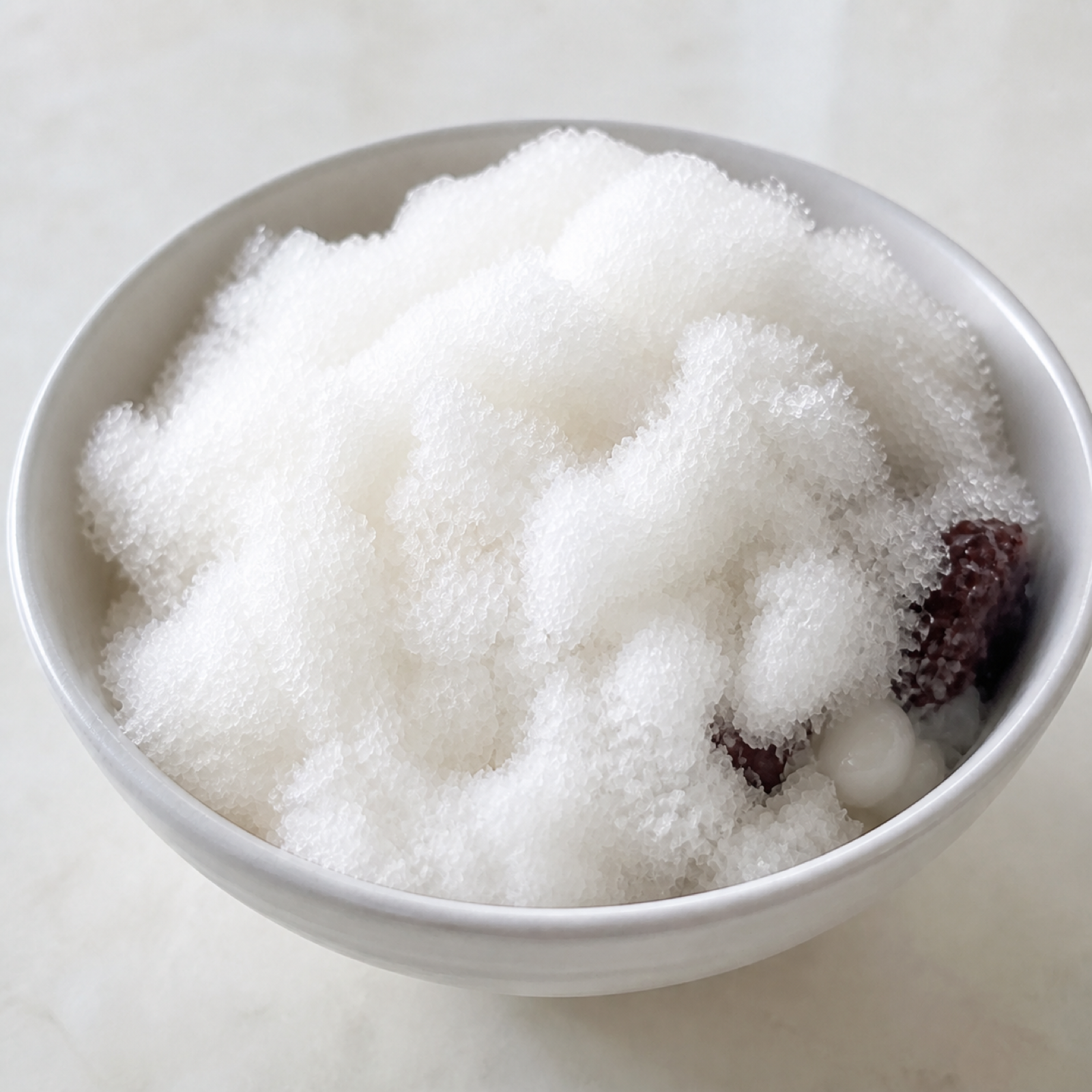
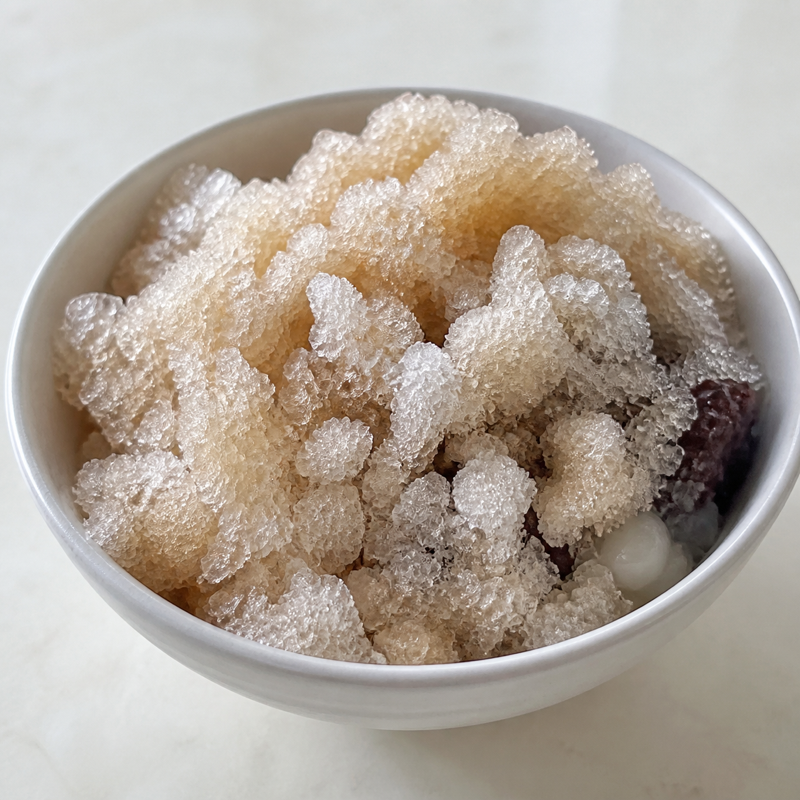
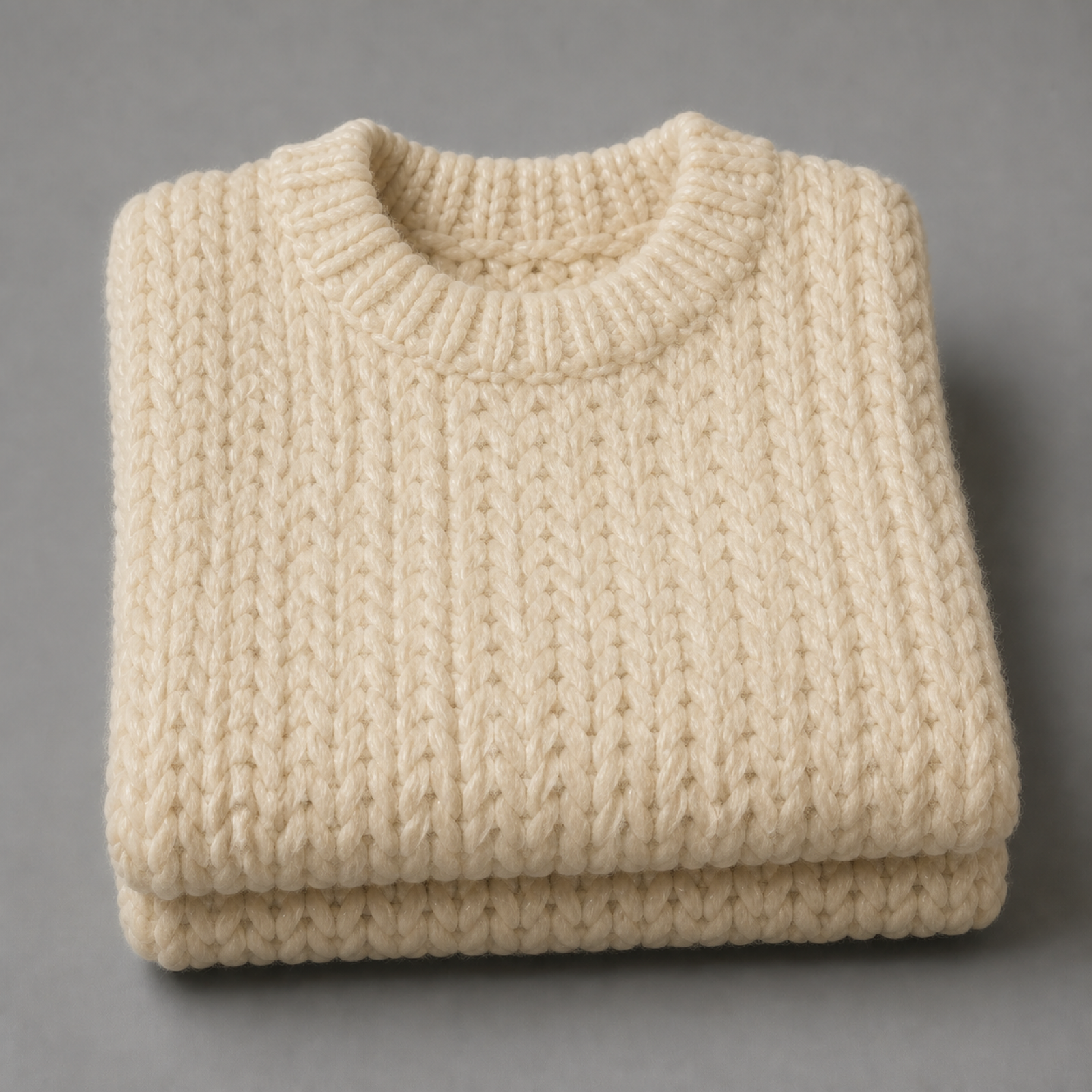
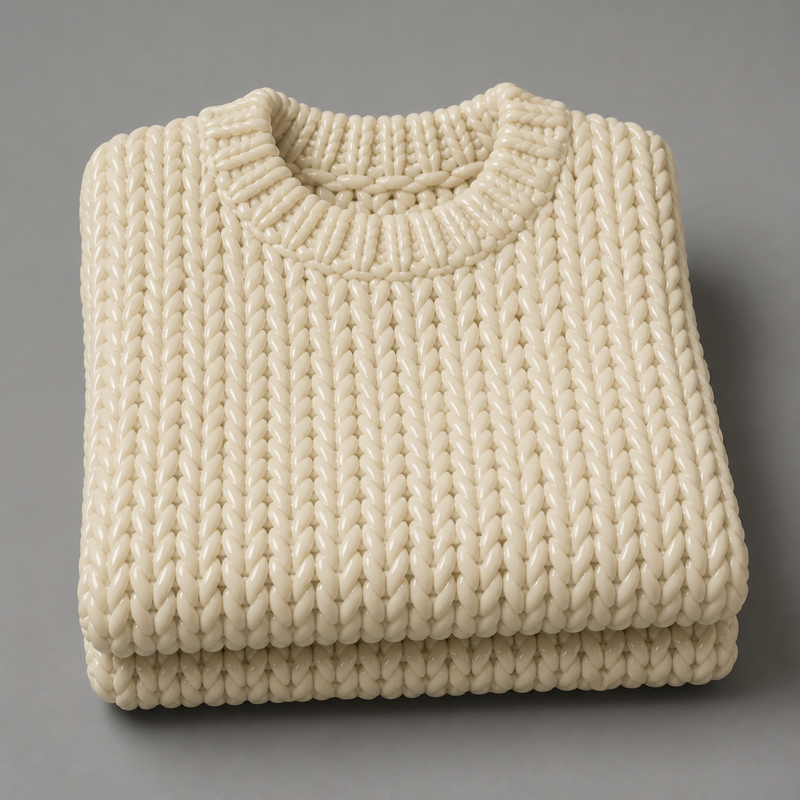
One treatment, two different photographs. Two faults of opposite kinds through one template — a food texture too coarse and a fabric too smooth. Neither run was told what the picture should look like, only what the material should read as, and the correction was left to follow from that.
The subtraction check passes on both. Laid over their originals the bowl, the berries, the table and the light register exactly on one, and the jumper's fold, its shadow and the grey ground on the other; the only region that moves is the one the fields named. The wool run is the better of the two and shows why the physical fact is worth stating rather than an adjective: loose fibre ends now catch light away from the surface, so the form's edge is slightly undefined, which is exactly the sentence the field was given. The ice run has one real miss, and it is the rule this template presses hardest on: the ice went in a warm amber and came back near-white. The template says a texture repair is not a recolour, and the run took the clause about a changed surface taking light differently further than that clause allows. Check the colour of the repaired thing against the original before shipping — it is the part of a repair that drifts.
Generated for this library
Input
  Wrong       the shaved ice in the bowl
  How         coarse and gravelly, like crushed glass -
              it should read as packed snow
  Photograph  ice-bowl.png (1254 x 1254)

Returned   1 image · 1:1 · one thing different

fixed     the ice: crystals below what the eye resolves,
          so the surface reads as a solid soft mass
why       snow reads as snow because no single grain is
          separable at that distance
held      bowl, berries, table, light, crop and framing
          all identical
drifted   the ice's own colour - warm amber in, near-white
          out, which the recolour rule forbids
check     laid over the original, only the ice moves
words none, in any scriptYou fill in 2 fields — the braced lines at the top. Everything below them is fixed.
- 1The one thing that is wrong
- 2What is wrong with it, and what it should read as
Only the Wrong Thing
What this makes
Hand it a photograph with one material that reads wrong — gritty ice, plastic wool, rubbery bread — and it fixes that and refuses to touch anything else. Two fields.
You are given ONE photograph with ONE thing wrong with it. Return ONE image: the same photograph with that thing corrected and everything else identical. Follow every line. Replace only the FIELDS block; everything after it is fixed.
First — do you have the photograph and the fields?
Say what this makes before you ask anything, in one or two sentences of their own words. Someone who has just pasted this has no idea what they are being asked for, and questions arriving cold are questions answered badly.
If no photograph is attached, stop and ask for one. There is nothing to repair without it, and a picture generated from the description instead is a different picture that resembles the answer.
If either field below still has braces around it, stop and ask. Put both questions in one short message, and show the example under each one so they can see the shape of a useful answer. Wait for the replies, then work. Never fill a brace yourself.
Ask in whatever language they are writing to you in. Translate the questions and the examples; do not make someone read English to tell you what they want.
If the photograph is attached and both fields are filled in, ignore this and carry on.
Fields — replace these two lines only
- The one thing that is wrong: {a thing that can be found in the frame}
- What is wrong with it, and what it should read as: {the fault, and the material it should read as}
The law everything else follows from
Change what is broken. Everything else is not yours to improve.
The temptation in a repair is to make the picture better, and better is the enemy here: warmer light, a tighter crop, a cleaner background, a richer colour. Every one of those makes the result unusable, because the reader is putting this back beside pictures that were not improved. A repair that cannot be set next to the original as the same picture is a new picture.
What counts as broken is named in the fields and nowhere else. It is never inferred from the picture, and it never grows during the work.
What survives, and what does not
Changes — only this: the material named in the fields, and the light behaving on it, because a surface that changes changes how it takes light. Nothing else follows from it: a duller ice does not justify a warmer table.
Held, exactly:
- Composition, crop, aspect ratio, and the position of every object.
- Colour balance, white point, exposure and contrast across the frame.
- The light: its direction, its hardness, every shadow and highlight not on the repaired thing.
- Every other material, including ones that are also imperfect.
- Grain, focus, depth of field and any lens character.
The check is subtraction. Lay the two frames over each other. The named thing should be the only region that moves. Anything else that changed is the failure this template exists to catch.
The physical fact
Build the fix from why the material reads right, not from what it should look like.
"Natural", "appetising", "realistic" and "high quality" are adjectives, and an adjective gives the run nothing to do except make the picture prettier. A material that has gone wrong has gone wrong in a way that can be stated:
- Snow and shaved ice read as a solid soft mass because no single crystal is separable at that distance — grain below what the eye resolves, not gravel.
- Wool reads as wool because loose fibre ends catch light away from the surface, so the edge of the form is slightly undefined.
- Bread reads as bread because the crumb is open and irregular and the crust breaks the light differently from the inside.
- Skin, fur, foam, rust, cloth: each has one fact like this.
State the fact for the material in the fields, then correct the picture until the fact is true of it. The look follows; it is not the instruction.
The repair
- Work only inside the named thing's own edges. Where it meets something else, the join moves with it and the other side does not.
- Keep its shape, its position and its colour. A texture repair is not a recolour: if the ice was pink with syrup, it stays pink with syrup.
- Keep the imperfections that belong to it. A repair removes the fault named in the fields and nothing else — a chip, a crumb, a stray fibre stays.
- Match the frame it lives in: the same grain, the same focus, the same light. A perfectly sharp patch inside a soft photograph is another way of failing.
Never
- A change to anything not named in the fields.
- A crop, a rotation, a resize, or an extension of the frame.
- Lettering, numerals, labels, arrows, callouts or watermarks anywhere, in any script.
- A before-and-after split, a side-by-side, or a second panel. One frame comes back.
- A second attempt at the same fault inside one image.
What it should read as
The photograph the reader thought they had taken — indistinguishable from the original everywhere except the one place they were looking.
The whole template, in one piece. The steps below are the entire workflow.
How to use it
- Copy the whole template with the button above.
- Attach your photograph and paste the template in the same message.
- Replace the two FIELDS lines. In the second, say what the material should read as rather than how it should look — that is what the fix is built from.
- Put the two frames side by side before shipping and look at everything except the fault. Anything else that changed is the failure this template exists to catch.
- For a second fault, run again from the original photograph, never from the repaired one.
What you swap
- The one thing that is wrong
- the shaved ice in the bowl
- What is wrong with it, and what it should read as
- coarse and gravelly, like crushed glass — it should read as packed snow
Before it runs
- An actual photograph, attached to the message. There is nothing here for a description to work on.
- One fault, not a list. Two materials wrong in one frame is two runs, because the moment the template is allowed to touch two things it stops being able to promise it touched nothing else.
- A picture that is otherwise right. This is a repair, not a rescue — if the light and the composition are also wrong, fix those first or use a different template.
- The fault named as a thing, not as a feeling. 'The ice' can be found in the frame; 'it looks bad' cannot, and a run that cannot find the fault will improve the picture instead.
When to reach for it
When a picture is right except for one surface: a generated shot where the food looks inedible, a render where the fabric looks moulded, a photograph where one material never came out. Templates in this style say make it look better and hand back a different picture — new light, new colour, new crop — with the original fault still in it.
What changes
- One photograph in, one out — the named material corrected and the rest of the frame identical.
- The fix is built from the physical reason the material reads right, not from an adjective like natural or appetising.
- Colour, light, crop, composition and every other surface are named as untouchable, so there is nothing left to quietly improve.
- Comparable side by side with the original, which is the only way a repair can be checked.
- No words, no labels, no before-and-after split — one frame, as it should have come out.
Pairs with
- A Grade Moves No ShadowHand it a snapshot and it comes back graded — a named contrast curve, a named colour split, halation and grain — with every object, every shadow and the whole framing exactly where they were. Two fields.
- A Hole Has No Focal PlaneHand it a photograph and it takes the picture again through a pinhole — no lens, so nothing is ever truly sharp and nothing is ever more blurred than anything else, with the corners falling away because of simple geometry. Two fields.
- A Line at a Constant HeightHand it a photograph and it comes back as contour lines — every line a closed loop at one depth, none of them crossing, none of them stopping in mid-air, with the spacing doing all the shading. Two fields.