
You Can Only Add Light
Hand it a photograph and it comes back drawn in chalk on a black board — where the darkest thing in the picture is bare board, because chalk adds light and there is no way to draw a dark line. Two fields.
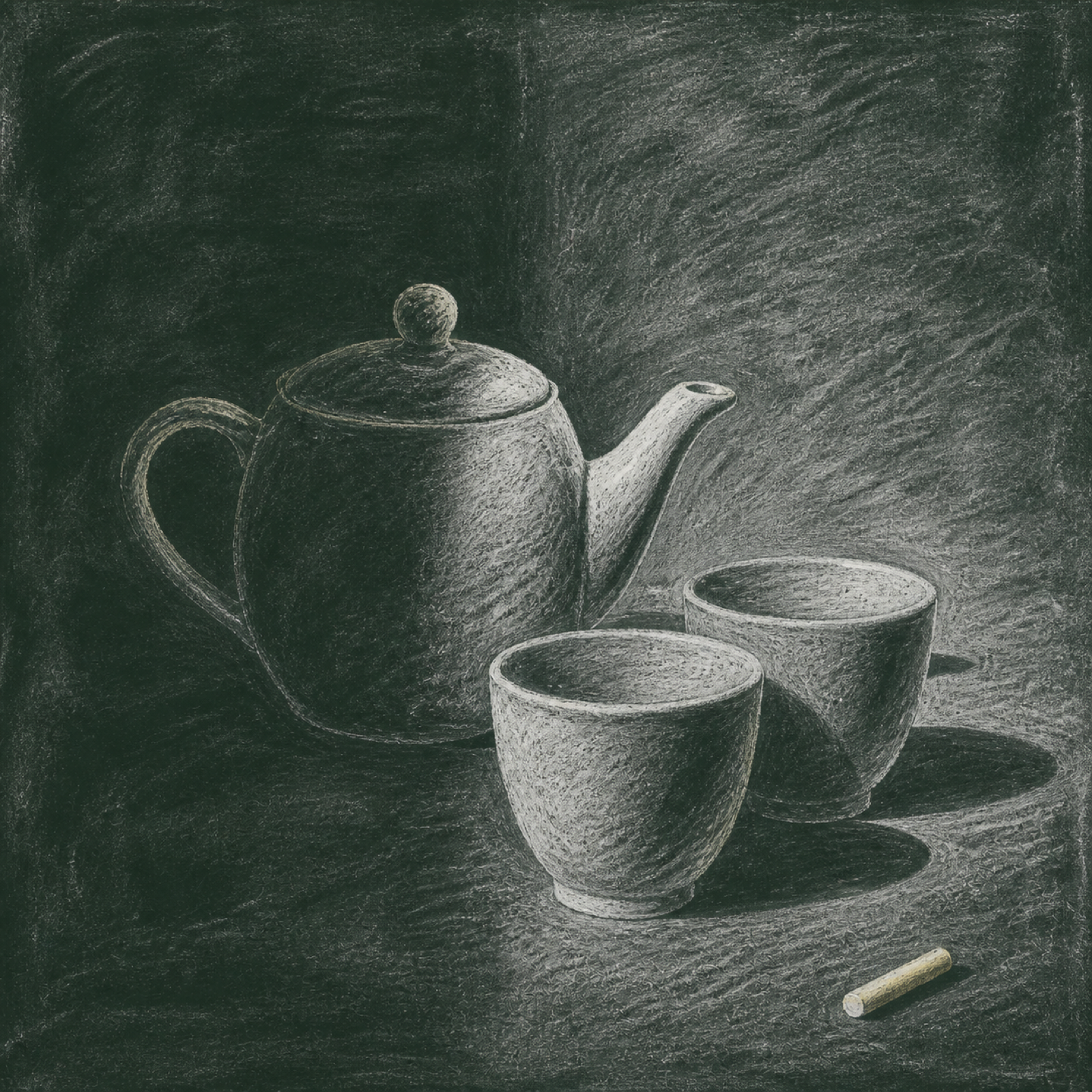
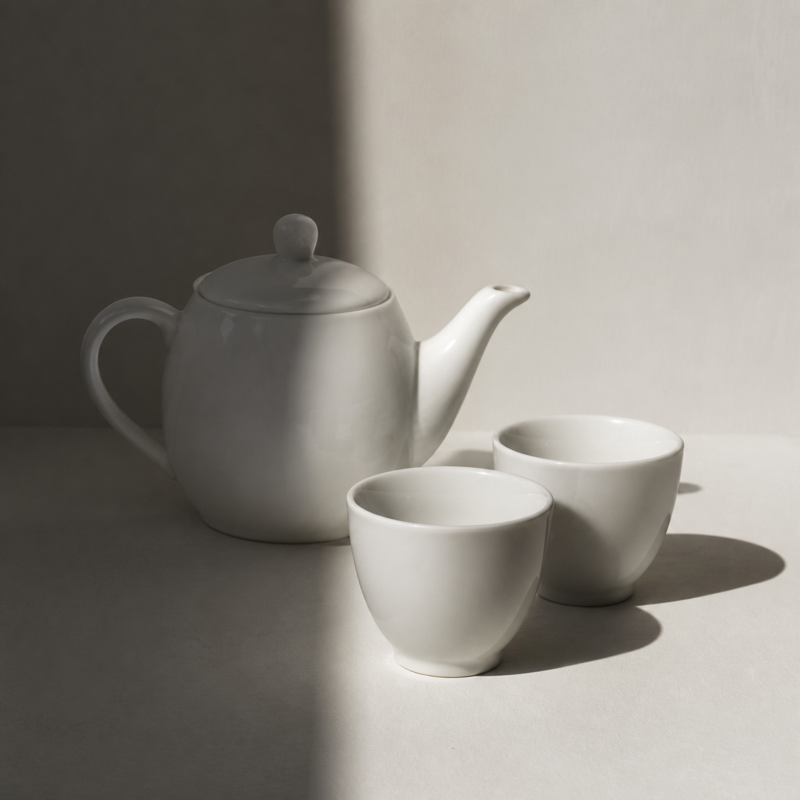
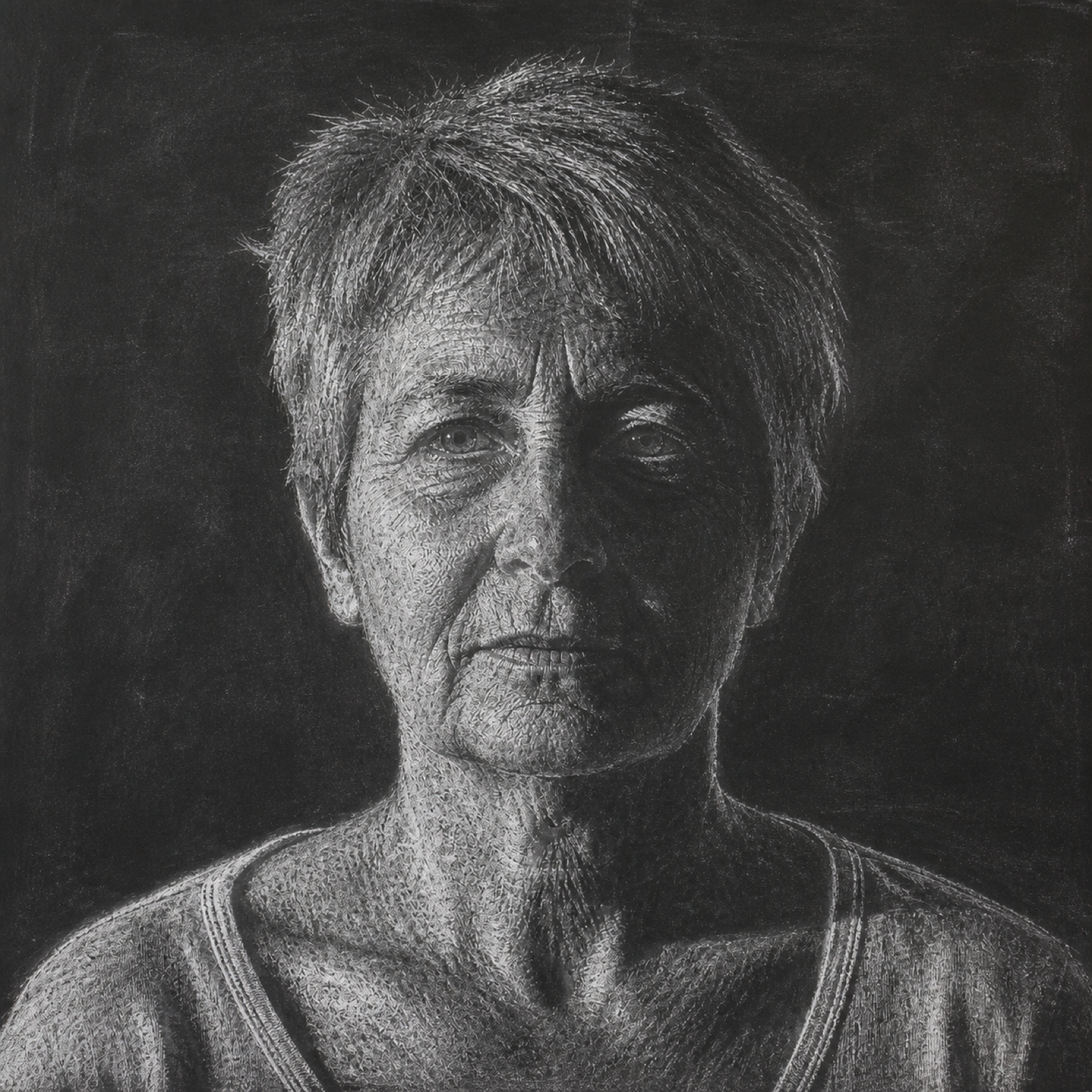
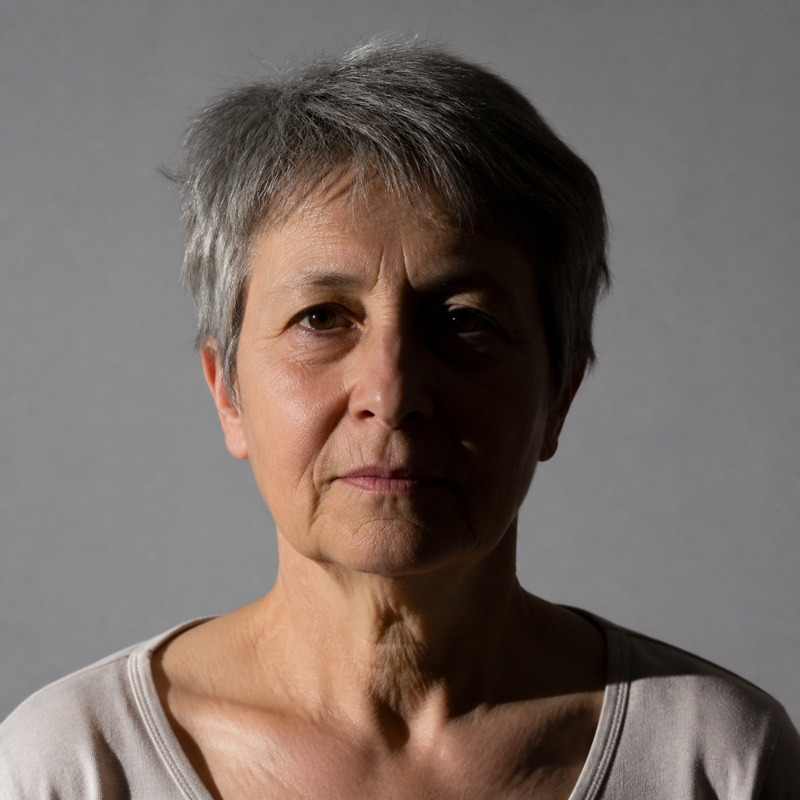
One treatment, two different photographs. A white teapot on a green board and a face on a black one — the second is the harder test, because a face has no bare shadow side to leave alone.
The law holds and it is measurable. In the teapot run the board's own dark floor sits at 37 and the darkest point anywhere inside the drawing is also 37: not one mark is darker than the surface it is drawn on, which is the entire claim. The portrait matches it to within six levels out of 255, and it is the more impressive of the two — a face built out of added light alone, with the background left as bare board and the shadow side of the head simply not drawn. Both show the board's grain through every stroke and the ghosts of old wipes underneath. One clear miss: the teapot run left a stick of chalk lying in the bottom corner, which the Never list forbids in exactly those words. It is easy to spot and easy to re-run, but it is worth knowing that the run likes to put the tool in the picture.
Generated for this library
Input
  Bare board  the background and the shadowed side of the
              teapot are bare board, untouched
  Board and   a well-used dark green board, white chalk
  chalk       with one stick of pale yellow
  Photograph  teapot.png (1254 x 1254)

Returned   1 image · 1:1 · the teapot in chalk

darkest    nothing in the drawing is darker than the
           board: board floor 37, darkest point inside
           the teapot also 37
range      short and visibly so - the lit side of the
           teapot and its brightest highlight are
           nearly the same chalk
texture    the board's grain breaks up every stroke,
           and old wipe marks show through
mistake    a stick of chalk is lying in the frame,
           which the body forbids by name
words none, in any scriptYou fill in 2 fields — the braced lines at the top. Everything below them is fixed.
- 1What in the picture is left as bare board
- 2The board and the chalk
You Can Only Add Light
What this makes
Hand it a photograph and it comes back drawn in chalk on a black board — where the darkest thing in the picture is bare board, because chalk adds light and there is no way to draw a dark line. Two fields.
You are given ONE photograph. Return ONE image: that photograph drawn in chalk on a board. Follow every line. Replace only the FIELDS block; everything after it is fixed.
First — do you have the photograph and the fields?
Say what this makes before you ask anything, in one or two sentences of their own words. Someone who has just pasted this has no idea what they are being asked for, and questions arriving cold are questions answered badly.
If no photograph is attached, stop and ask for one. This draws a particular picture; there is nothing to draw without it.
If either field below still has braces around it, stop and ask. Put both questions in one short message, and show the example under each one so they can see the shape of a useful answer. Wait for the replies, then work. Never fill a brace yourself.
Ask in whatever language they are writing to you in. Translate the questions and the examples; do not make someone read English to tell you what they want.
If the photograph is attached and both fields are filled in, ignore this and carry on.
Fields — replace these two lines only
- What in the picture is left as bare board: {the areas that stay untouched}
- The board and the chalk: {a board colour and condition, and the sticks}
The law everything else follows from
Everything about how the subject is drawn may change. Nothing about what is in it may.
The rendering becomes chalk on a board. What is in the picture does not move: same subject, same angle, same arrangement, same framing, same number of things, same relative sizes. It is that photograph, chalked.
Chalk adds light and nothing else
This is the whole rewrite, and it is one sentence about a stick of chalk.
Chalk sits on top of a dark surface and makes it lighter. There is no way to make any part of the board darker than it already is. So the drawing is built from the dark upward, which is the opposite of how a pen drawing works:
- The darkest thing in the picture is bare board. Not a black line, not a dark stroke — nothing. The shadow side of an object is where no chalk was laid.
- There are no dark lines anywhere. An outline in chalk is a light line, or it is the untouched gap between two chalked areas.
- A dark detail inside a light area is drawn by leaving it, or by wiping chalk away. It is never added.
- The lightest thing is solid chalk, rubbed and burnished, and nothing in the picture goes brighter than that.
If any mark in the result is darker than the board it sits on, this has been drawn in ink and inverted.
The range is short and it runs out
- There are only about four usable values: bare board, a light dusting, a solid lay-in, and burnished chalk.
- Two things that were far apart in the photograph can end up close. A bright highlight and a bright midtone are both simply chalk, and the drawing has to choose which one to give up.
- Do not fake a longer range with airbrushed gradients. Blend by smudging with a finger, which is coarse and leaves a direction.
- Big flat areas of full chalk look wrong; real chalk laid thickly is still slightly uneven.
The board is present everywhere
- The board's colour and texture show through every part of the chalk except the most burnished, and its grain breaks up every stroke.
- The board is not black. It is a dark green, a dark grey or a worn black, and it is uneven: cloudier where it has been wiped, with faint ghosts of what was there before.
- Strokes have direction and a beginning and an end, heavier where the stick landed, and their edges are dusty rather than clean.
- The chalk sits on the surface. Up close, grains catch the light.
Detail is limited by the stick
- Nothing narrower than the chalk's edge exists. Fine lines are drawn with a corner of the stick and are still not fine.
- Small features become one mark, or are left as bare board.
- Texture becomes stroke direction rather than detail.
- The count of things stays right. Detail may go; objects may not.
Never
- Text, numerals, a menu, a price, a caption, a signature or a watermark anywhere, in any script.
- A mark darker than the board.
- A wooden frame, an easel, a classroom, a hand, a duster, a chalk stick lying in the frame, or a mock-up.
- Smooth airbrushed gradients, glows or drop shadows.
- A subject the photograph did not contain.
What it should read as
Something somebody drew standing up, in a few minutes, on a board that had been wiped a thousand times.
The whole template, in one piece. The steps below are the entire workflow.
How to use it
- Copy the whole template with the button above.
- Attach the photograph and paste the template in the same message.
- Replace the two FIELDS lines. Name the bare areas by where they are in the picture.
- Look for a dark mark. Any line darker than the board means the run drew in ink and inverted it, which is the failure this template exists to stop.
- Check the board texture. If it is smooth everywhere, the chalk was painted on rather than dragged across a surface.
What you swap
- What in the picture is left as bare board
- the background and the shadowed side of the teapot are bare board, untouched
- The board and the chalk
- a well-used dark green board, white chalk with one stick of pale yellow
Before it runs
- A photograph, attached to the message, with a clear light side and a clear dark side. Chalk describes a subject by its lights, and a flatly lit thing gives it nothing to work with.
- A decision about what stays untouched. It is the first field and it is the composition: what you leave alone is what makes everything else read.
- Few colours. A box of chalk is a handful of sticks, and a picture asking for photographic colour will come back as a pastel painting instead.
- Acceptance that the range is short. Chalk cannot get much brighter than chalk, so a very bright highlight and a fairly bright midtone end up close together.
When to reach for it
When something should look explained rather than rendered: a menu, a title card, a diagram, a shop board, a lecture slide. Templates in this genre ask for a chalkboard style and hand back white lines on a dark background — a negative of an ordinary drawing, with shading that no stick of chalk could make.
What changes
- One photograph in, one chalk drawing out — worked from the dark upwards.
- The darkest thing in the picture is untouched board, because chalk cannot make anything darker.
- Tone is built by how much chalk is laid down and how hard, which is a limited range that runs out.
- The board's own texture shows through everywhere the chalk is thin, which is most of it.
- One image, no type, no frame, no wooden border, no eraser dust as decoration.
Pairs with
- A Grade Moves No ShadowHand it a snapshot and it comes back graded — a named contrast curve, a named colour split, halation and grain — with every object, every shadow and the whole framing exactly where they were. Two fields.
- A Hole Has No Focal PlaneHand it a photograph and it takes the picture again through a pinhole — no lens, so nothing is ever truly sharp and nothing is ever more blurred than anything else, with the corners falling away because of simple geometry. Two fields.
- A Line at a Constant HeightHand it a photograph and it comes back as contour lines — every line a closed loop at one depth, none of them crossing, none of them stopping in mid-air, with the spacing doing all the shading. Two fields.