
Paper Bends One Way Only
Hand it a photograph and it comes back built out of cut paper — a countable stack of flat layers, each throwing a shadow on the one behind it, and every curve rolled in one direction because that is all a sheet can do. Two fields.
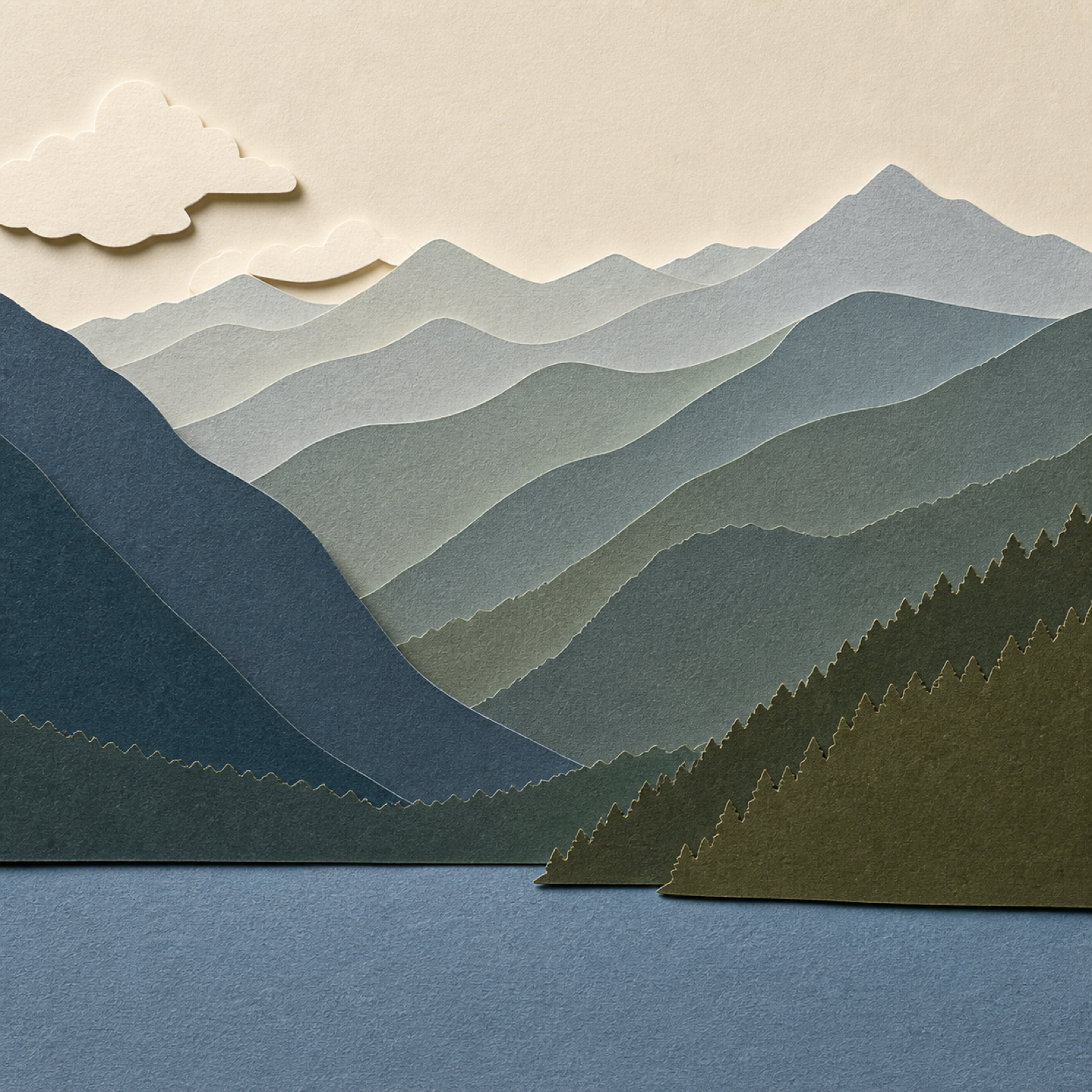
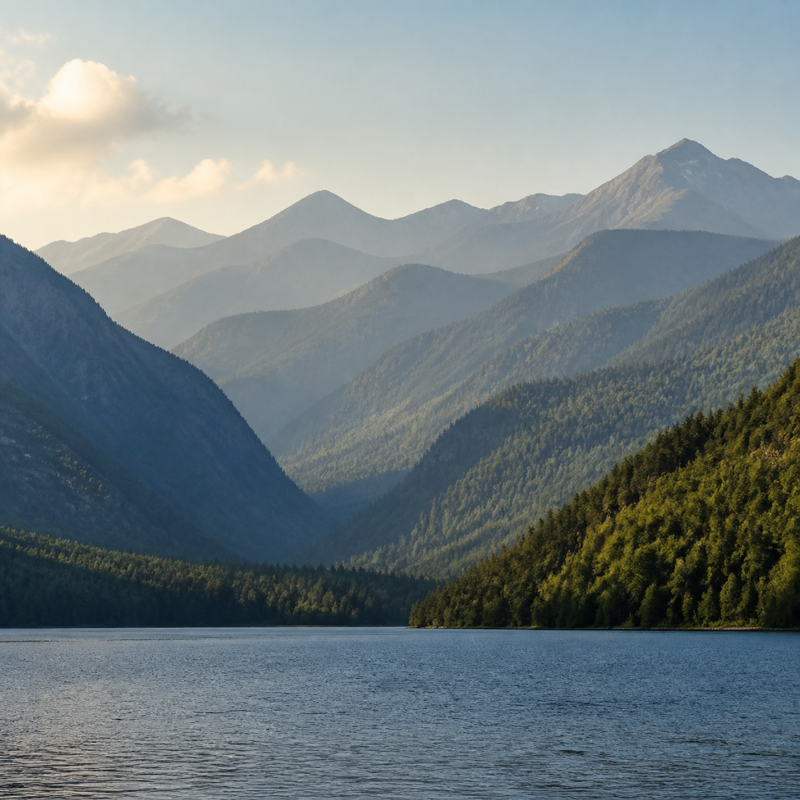
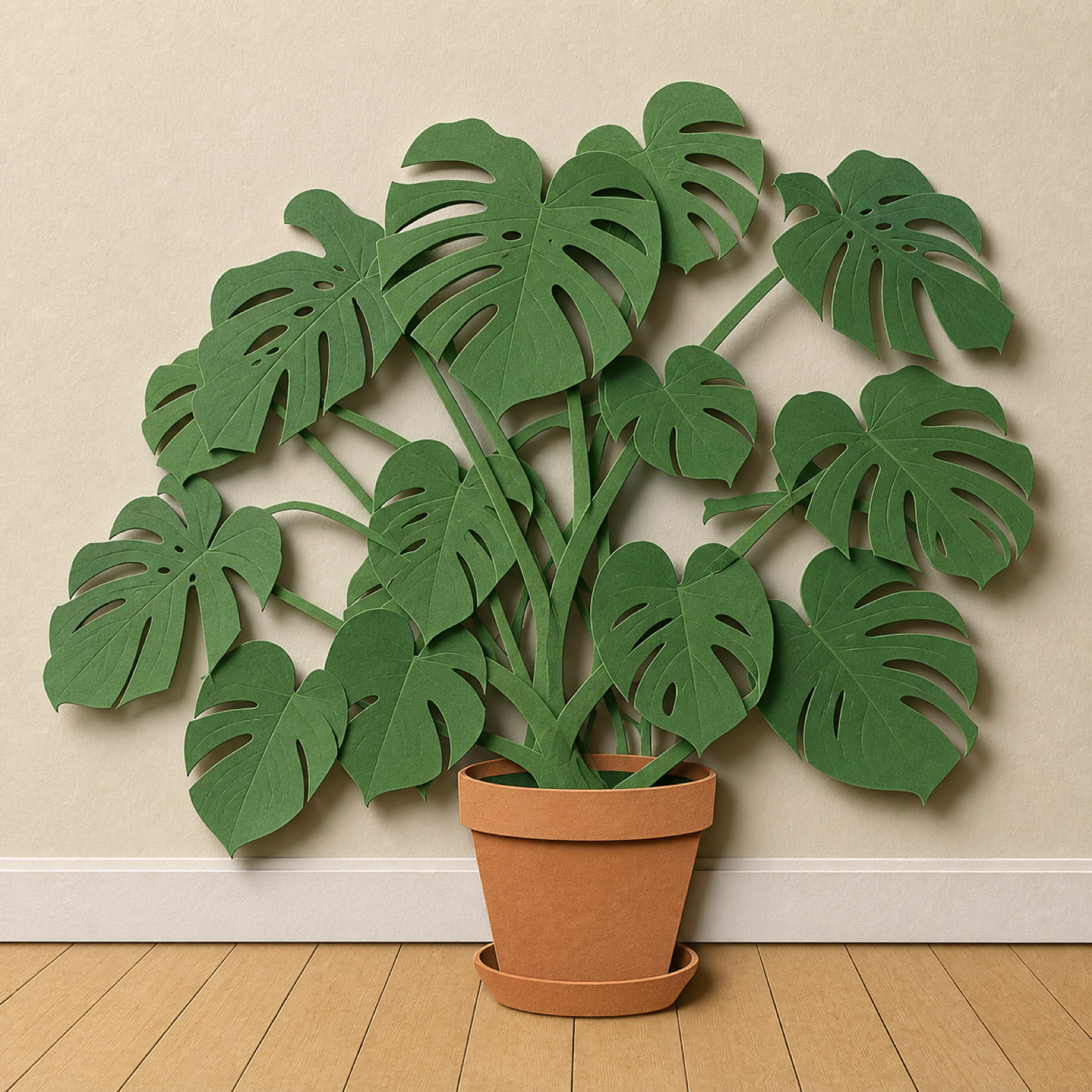
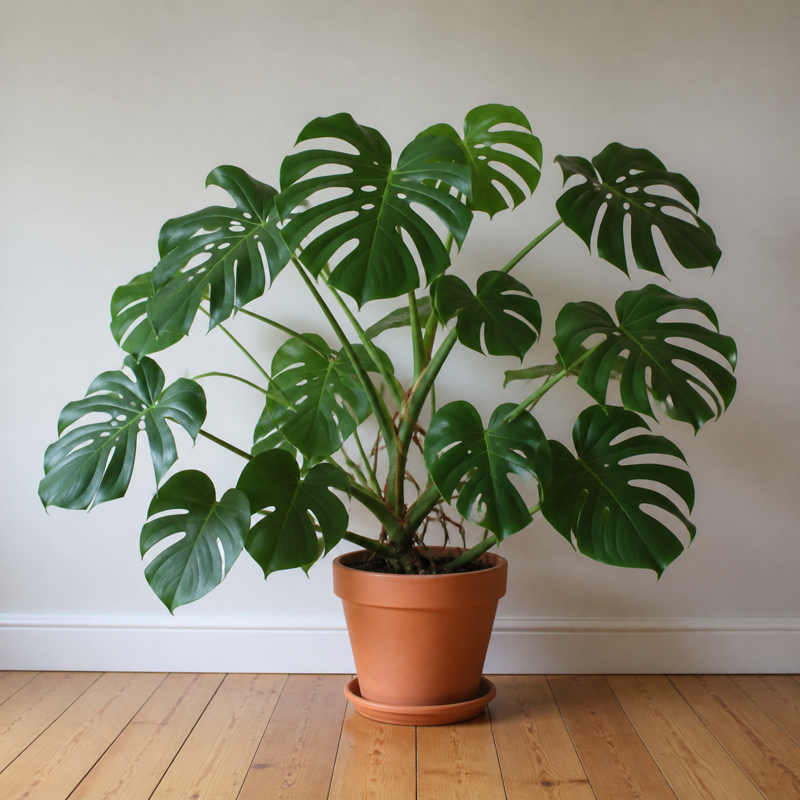
One treatment, two different photographs. A valley that is all distance and a houseplant that is nearly all one plane — the second is the harder test, because there is barely any depth to separate into sheets.
The material law binds hard, which is the point of stating it. Nothing in either result is curved in two directions: the ridges are flat sheets with cut edges, the pot is a rolled cone with a straight highlight down it, and the plant's floor is strips of card with a paper grain rather than photographed wood. Every plane throws a shadow onto the one behind it in one consistent direction, and the width of that shadow reads as the gap. The forest, which is the only fine texture in the first photograph, became a sawtooth cut edge — exactly the right answer, and a good demonstration of detail being dropped into the shape it belongs to. What did not bind is the number. Five layers were asked for and about nine came back, and the run treated the count as an atmosphere rather than an instruction. The layers are still flat and still in the photograph's depth order, so the build is sound; it is simply deeper than specified. Read the first field as which things are at the front and the back — that part holds — and expect the count to drift toward however many planes the photograph actually has.
Generated for this library
Input
  Layers      five - the lake on the front layer, the
              furthest ridge on the back one
  Paper       matt coloured card, slightly fibrous at the
              cut edges, in the picture's own colours
  Photograph  valley.png (1254 x 1254)

Returned   1 image · 1:1 · the valley cut from card

layers     about nine against the five that were asked
           for - flat planes throughout, in the
           photograph's own depth order
shadows    one direction across the whole build, and
           the gap is legible from the shadow's width
curves     none in two directions - the ridges are flat
           sheets, the forest is a sawtooth cut edge
detail     the trees became one cut edge; nothing small
           survived as itself
words none, in any scriptYou fill in 2 fields — the braced lines at the top. Everything below them is fixed.
- 1How many layers, and what is on the front one and the back one
- 2The paper it is cut from
Paper Bends One Way Only
What this makes
Hand it a photograph and it comes back built out of cut paper — a countable stack of flat layers, each throwing a shadow on the one behind it, and every curve rolled in one direction because that is all a sheet can do. Two fields.
You are given ONE photograph. Return ONE image: that photograph built out of cut paper. Follow every line. Replace only the FIELDS block; everything after it is fixed.
First — do you have the photograph and the fields?
Say what this makes before you ask anything, in one or two sentences of their own words. Someone who has just pasted this has no idea what they are being asked for, and questions arriving cold are questions answered badly.
If no photograph is attached, stop and ask for one. This rebuilds a particular picture; there is nothing to cut without it.
If either field below still has braces around it, stop and ask. Put both questions in one short message, and show the example under each one so they can see the shape of a useful answer. Wait for the replies, then work. Never fill a brace yourself.
Ask in whatever language they are writing to you in. Translate the questions and the examples; do not make someone read English to tell you what they want.
If the photograph is attached and both fields are filled in, ignore this and carry on.
Fields — replace these two lines only
- How many layers, and what is on the front one and the back one: {a number, and the two ends}
- The paper it is cut from: {a stock, a finish, and its colours}
The law everything else follows from
Everything about how the subject is drawn may change. Nothing about what is in it may.
The rendering becomes a material. What is in the picture does not move: same subject, same arrangement, same framing, same number of things, same relative sizes and same depth order. It is that photograph, cut out.
Paper bends one way only
This is the whole rewrite, and it is one fact about sheets.
A flat sheet can be rolled, scored and folded, so it makes cylinders, cones, prisms and creases. It cannot take a curve in two directions at once without crumpling or being cut and joined. So there are no spheres, no domes, no smoothly rounded faces, no soft blobs anywhere:
- Round things become flat silhouettes, or cylinders, or cones, or a few flat facets meeting at creases.
- A curve in the picture is a rolled sheet, and you can see which way it was rolled because the highlight runs in a straight line along the roll.
- A fold is a hard crease with a bright edge, not a soft bend.
- If anything in the result is smoothly round in every direction, no sheet was involved and the picture has failed.
A countable number of layers
- Build exactly the number of layers the first field names. Not approximately, and not a continuous depth.
- Each layer is one flat plane, parallel to the picture, at its own distance behind the one in front.
- Everything on a layer is at that layer's depth. Nothing leans back, nothing pokes through, nothing sits between two layers.
- The layers keep the photograph's depth order. What was in front is in front.
Every layer shadows the one behind it
- Each cut edge throws a soft shadow onto the layer behind, offset in one consistent direction across the whole picture.
- The shadow's size shows the gap. A layer with a big shadow is further off the one behind it than a layer with a thin one, and that is how the depth is read.
- Light comes from one direction, from slightly in front, the way a lamp over a table would.
- The shadows are the only shading. No gradient printed on a layer, no airbrushed sky, no glow.
What the knife cannot hold
- Nothing narrower than a cut survives. Twigs, wires, whiskers, lettering and single leaves become part of the shape they belong to, or disappear.
- Small features are separate small pieces or nothing. An eye is a cut disc of dark paper, not a printed dot.
- Texture is the paper's, not the subject's. Bark, fur, water and brick are all the same matt sheet; their pattern, if any, is cut out of it.
- The count of things stays right. Detail may go; objects may not.
Never
- Text, numerals, a signature, a caption or a watermark anywhere, in any script.
- A photograph of a craft table, a hand, a scalpel, a cutting mat or a frame around the build.
- Smooth 3D rendering, plastic, clay, felt, wool or anything that is not a sheet.
- A printed photographic texture on a layer.
- A subject the photograph did not contain.
What it should read as
Something somebody cut out and stacked up — and you can count the sheets from across the room.
The whole template, in one piece. The steps below are the entire workflow.
How to use it
- Copy the whole template with the button above.
- Attach the photograph and paste the template in the same message.
- Replace the two FIELDS lines. Name the front and back layers from the picture, so the depth has two ends.
- Count the layers in the result. If you cannot count them, the run has made a soft 3D scene rather than a stack of sheets.
- Look for a double curve — a sphere, a dome, a rounded face. Paper cannot make one, and finding one means the run rendered rather than cut.
What you swap
- How many layers, and what is on the front one and the back one
- five layers — the lake on the front layer, the furthest ridge on the back one
- The paper it is cut from
- matt coloured card, slightly fibrous at the cut edges, in the picture's own colours
Before it runs
- A photograph, attached to the message, with distances in it. A picture that is all one plane has no layers to separate and comes back as a flat cut-out.
- A number of layers you have actually chosen. Four is a landscape; ten is a thicket. The count is the design decision, and 'several' will produce a mush.
- Willingness to lose everything small. A leaf, a face, a wire and a word are all below the size of a cut, and they become part of the shape they sit on.
- A subject that survives being simplified into silhouettes. If the thing is only recognisable by its surface detail, this is the wrong treatment for it.
When to reach for it
When something should look made by hand out of materials: a card, a cover, a title card, a window display, a children's book page. Templates in this genre ask for a paper-craft diorama and hand back a smooth 3D render with a paper texture on it — round forms no sheet could be folded into, and no layers to count.
What changes
- One photograph in, one cut-paper construction out — a stack of flat layers you can count.
- Each layer casts a shadow onto the one behind it, and the size of that shadow tells you the gap.
- Curves are rolled or scored in one direction only, because paper cannot take a double curve without crumpling.
- Detail smaller than a cut is dropped into the shape it belongs to instead of being printed on it.
- One image, no type, no border, no photograph of a craft table.
Pairs with
- One Square, and No CutsHand it a photograph and it comes back folded from a single square of paper — no cuts and nothing thrown away, so the paper the model does not use has to be tucked somewhere and it shows. Two fields.
- The Stitch Is the Smallest UnitHand it a photograph and it comes back stitched — every colour a whole thread from a count you set, every shape built out of stitches that lie in a direction, and the fabric showing between them. Two fields.
- A Grade Moves No ShadowHand it a snapshot and it comes back graded — a named contrast curve, a named colour split, halation and grain — with every object, every shadow and the whole framing exactly where they were. Two fields.