
One Square, and No Cuts
Hand it a photograph and it comes back folded from a single square of paper — no cuts and nothing thrown away, so the paper the model does not use has to be tucked somewhere and it shows. Two fields.
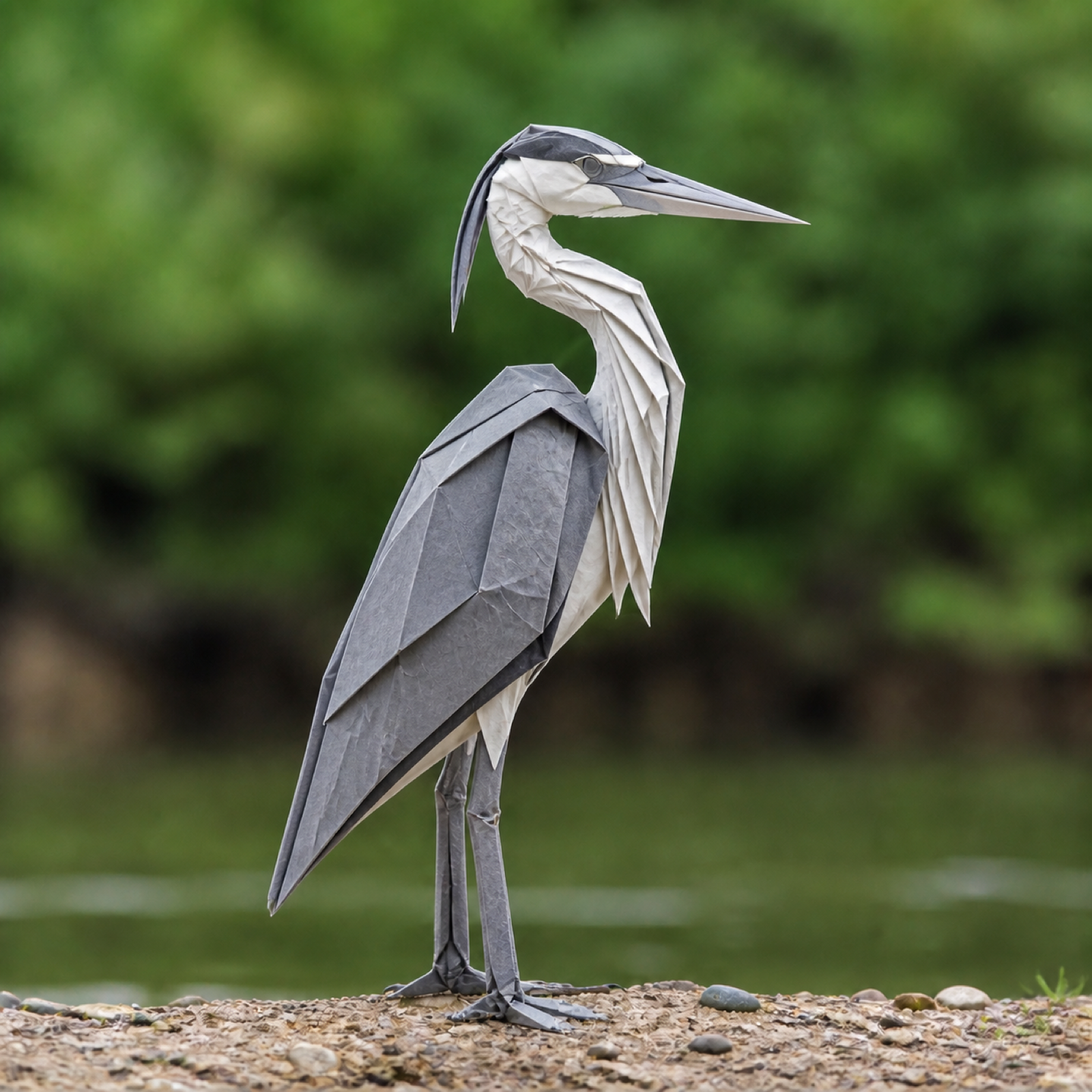
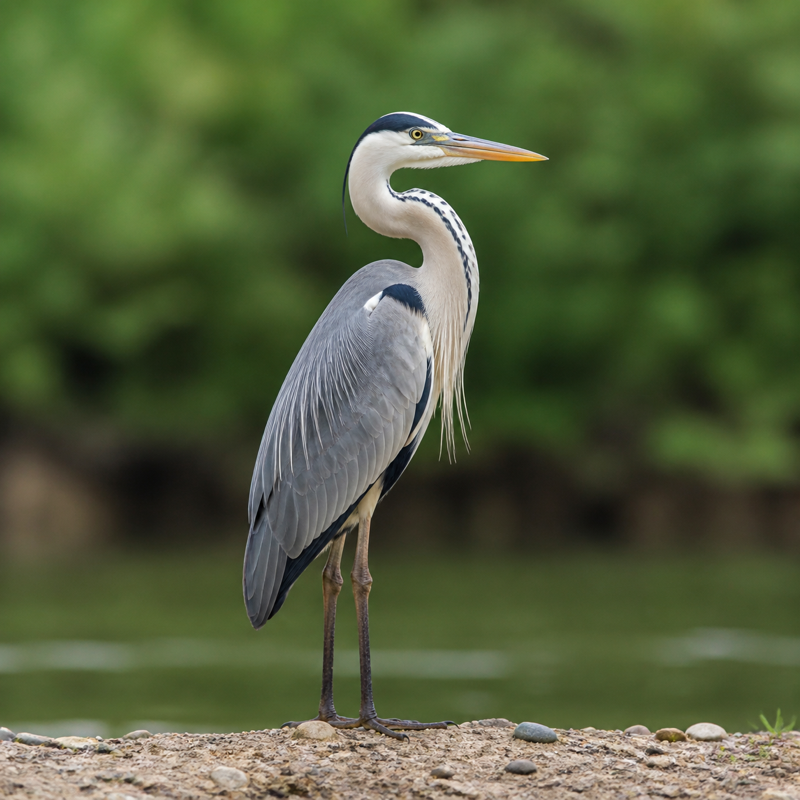
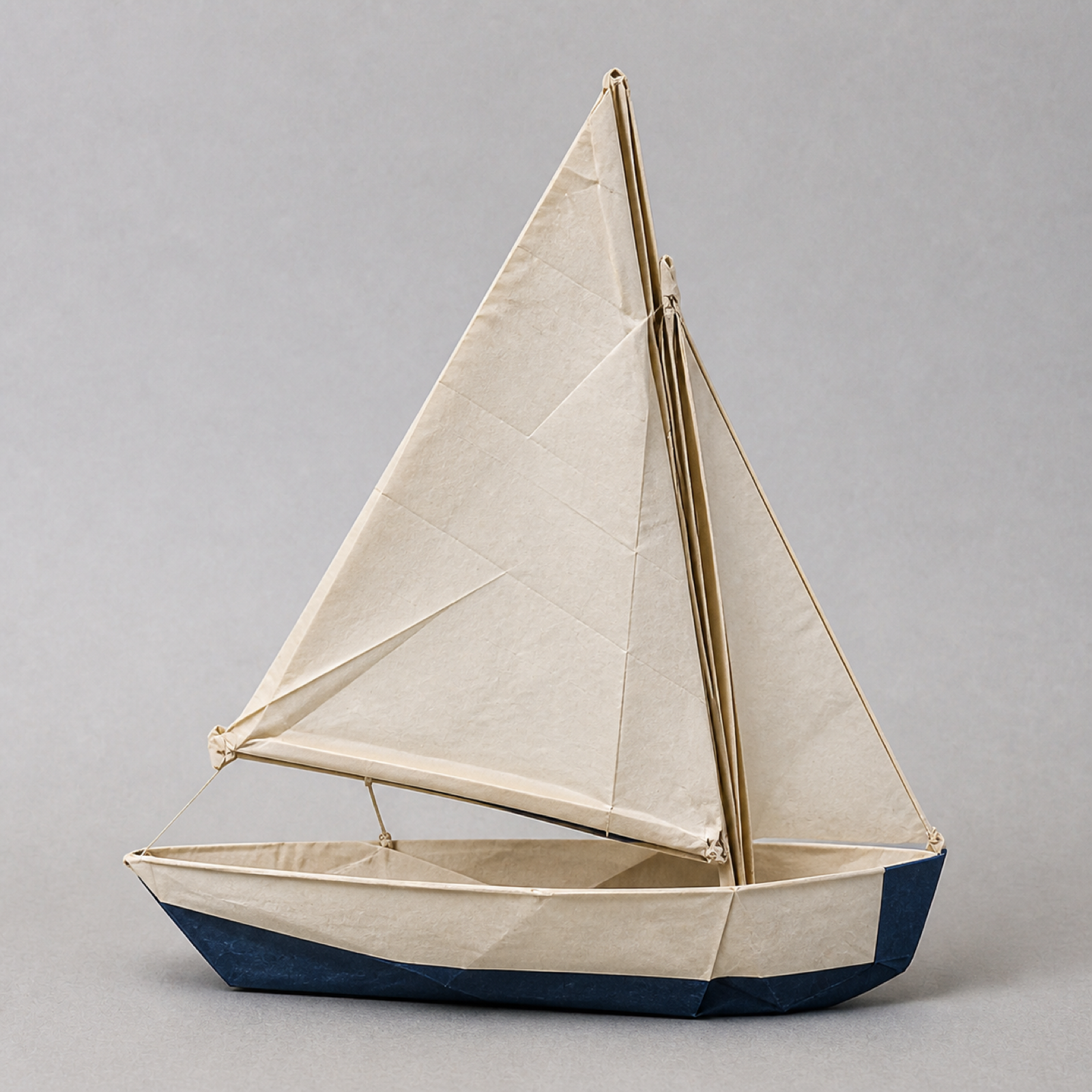
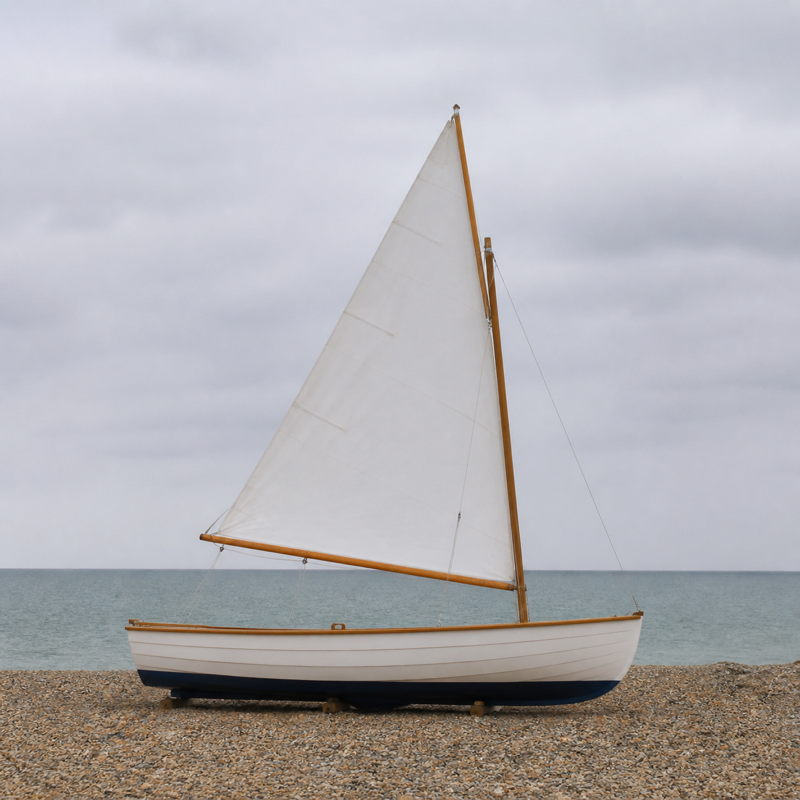
One treatment, two different photographs. A heron and a sailing dinghy — one made of a single material, one that tempted the run into adding a second.
The heron is a folded model. Every surface is flat between hard creases, the neck is a prism rather than a tube, the wing is a stack of sheets with each upper edge shadowing the one beneath, and the white reverse of the paper shows exactly where the second field said it should. Nothing on it is round in two directions. Its legs are the exception — they came back as thin photographic legs rather than folded paper, which is the run keeping the part that makes the bird stand up. The dinghy breaks the rule outright and is worth studying. Its hull is properly faceted with a blue reverse, but the mast, boom and gaff came back as round wooden dowels and the sails as cloth. Those are separate pieces of a second material, and the whole premise is one square with nothing added. A paper mast would flop, which is why it is not there — the same reason the heron kept its legs. If a subject depends on a rigid thin part, expect that part to survive as itself.
Generated for this library
Input
  Must get    the long neck, the dagger bill and the
  right       swept-back crest
  Paper       heavy grey, white on the reverse, so the
              crest and the belly come out white
  Photograph  heron.png (1254 x 1254)

Returned   1 image · 1:1 · the heron folded

creases    hard, with a bright line along every ridge
layers     the wing is a stack of flat sheets, each
           upper edge shadowing the one beneath
curves     none in two directions - the neck is a
           folded prism, the body a set of facets
reverse    white shows on the belly and throat, as the
           field asked
legs       still photographic rather than folded
words none, in any scriptYou fill in 2 fields — the braced lines at the top. Everything below them is fixed.
- 1Which two or three features the folding must get right
- 2The paper, and which side shows
One Square, and No Cuts
What this makes
Hand it a photograph and it comes back folded from a single square of paper — no cuts and nothing thrown away, so the paper the model does not use has to be tucked somewhere and it shows. Two fields.
You are given ONE photograph. Return ONE image: that subject folded from a single square of paper. Follow every line. Replace only the FIELDS block; everything after it is fixed.
First — do you have the photograph and the fields?
Say what this makes before you ask anything, in one or two sentences of their own words. Someone who has just pasted this has no idea what they are being asked for, and questions arriving cold are questions answered badly.
If no photograph is attached, stop and ask for one. This folds a particular shape; there is nothing to fold without it.
If either field below still has braces around it, stop and ask. Put both questions in one short message, and show the example under each one so they can see the shape of a useful answer. Wait for the replies, then work. Never fill a brace yourself.
Ask in whatever language they are writing to you in. Translate the questions and the examples; do not make someone read English to tell you what they want.
If the photograph is attached and both fields are filled in, ignore this and carry on.
Fields — replace these two lines only
- Which two or three features the folding must get right: {a few characteristic shapes}
- The paper, and which side shows: {a stock, its two faces}
The law everything else follows from
Everything about how the subject is drawn may change. Nothing about what is in it may.
The rendering becomes folded paper. What is in the picture does not move: same subject, same posture, same proportions, same number of things, same framing. It is that photograph, folded.
One square, no cuts, and nothing thrown away
This is the whole rewrite, and it is a rule of the craft rather than a look.
The model is made from a single square sheet. It is folded and never cut, and no paper is removed, so every bit of that square is still in the model somewhere. Everything follows:
- Paper is conserved, so it gathers. Where the model needs detail — a head, a set of toes, a crest — many layers pile up, and the model is visibly thicker there. You can see the stack of edges.
- Where the model is simple it is thin, one or two layers, and slightly translucent against the light.
- Every free edge is an edge of the original square, so the tips and points of the model are corners and edges of that sheet.
- There are no cut edges anywhere. Nothing has a raw sliced end.
- Nothing is glued and nothing is added. No second sheet, no tape, no wire, no eyes stuck on.
A folded sheet has no curves
- Every surface is dead flat between its creases.
- Every change of direction is a hard crease with a sharp highlight along it, not a soft bend.
- A curve in the subject becomes a chain of flat facets meeting at creases — a fan of them where the curve is tight.
- A cone or a cylinder is allowed, because a sheet can roll one way, and its highlight runs in a straight line along the roll.
- Nothing is smoothly round in two directions. No spheres, no domes, no moulded heads.
The creases show their history
- Fold lines cross the flats where the paper was folded and opened again — the map of the folding sequence, faint but present.
- Mountain creases catch the light along their ridge; valley creases hold a thin shadow in their trough.
- Where layers overlap, the edge of the upper layer casts a fine shadow on the one beneath.
- A little softness at the tips, where paper refuses to come to a perfect point.
The paper is a material
- The stock the second field names, with its own weight, tooth and colour.
- The reverse side shows where the folding turns it out, and that is a real design tool: name it and use it for the parts the field says should be the other colour.
- The paper takes light like paper — matt, slightly translucent at a single thickness, opaque where it stacks.
- No printed pattern, no photographic texture, no colour that changes across one flat.
What folding cannot say
- Texture is gone. Feathers, fur, scales, brick and cloth are all flat paper.
- Small features are one flap or nothing. An eye is a fold, a dot of the reverse side, or absent.
- The count of things stays right. Detail may go; objects may not.
Never
- Text, numerals, a signature, a caption or a watermark anywhere, in any script.
- Hands, a craft table, a cutting mat, scissors, a frame or a mock-up.
- Glue, tape, staples, stuck-on eyes, wire or a second sheet.
- A smooth rendered surface, plastic, clay, or a low-poly model without creases.
- A subject the photograph did not contain.
What it should read as
Something one person folded from one square in an afternoon — and you could probably find the corner of the sheet if you looked.
The whole template, in one piece. The steps below are the entire workflow.
How to use it
- Copy the whole template with the button above.
- Attach the photograph and paste the template in the same message.
- Replace the two FIELDS lines. Name the features as shapes a fold could make — a point, a long taper, a flap.
- Look for thickness. Where the model gathers detail there should be visible layers stacked up. A model that is one skin thick everywhere was modelled, not folded.
- Look for a curve. Any smoothly rounded surface means the run rendered a shape instead of folding a sheet.
What you swap
- Which two or three features the folding must get right
- the long neck, the dagger bill and the swept-back crest
- The paper, and which side shows
- heavy grey paper, white on the reverse, so the crest and the belly come out white
Before it runs
- A photograph, attached to the message, of something with a shape worth folding — an animal, a bird, a boat, a flower, a building. A soft, formless subject has nothing for a crease to describe.
- Two or three features, no more. A fold can hold a few characteristic points and everything else becomes a plane.
- Acceptance that the surface is gone. Feathers, fur, brick and cloth all become flat paper; only the shape survives.
- A subject that survives being made of planes. Anything whose whole charm is a curve will come back as a set of facets.
When to reach for it
When something should look made by patient hands: a card, a cover, a title card, a window display, a children's book. Templates in this genre ask for an origami style and hand back a smooth faceted 3D model — low-poly plastic with no folds, no layers and no edges of paper anywhere.
What changes
- One photograph in, one folded model out — creases and flats, nothing carved or moulded.
- The whole thing comes from one square with no cuts, so every part is somewhere on that sheet.
- Paper is conserved: the model is visibly thicker where many layers gather, which is where the detail is.
- Every surface is dead flat between hard creases, because a folded sheet has no curves.
- One image, no type, no hands, no border, no craft table.
Pairs with
- Paper Bends One Way OnlyHand it a photograph and it comes back built out of cut paper — a countable stack of flat layers, each throwing a shadow on the one behind it, and every curve rolled in one direction because that is all a sheet can do. Two fields.
- The Stitch Is the Smallest UnitHand it a photograph and it comes back stitched — every colour a whole thread from a count you set, every shape built out of stitches that lie in a direction, and the fabric showing between them. Two fields.
- A Grade Moves No ShadowHand it a snapshot and it comes back graded — a named contrast curve, a named colour split, halation and grain — with every object, every shadow and the whole framing exactly where they were. Two fields.