

Every Drop Is a Lens
Hand it a photograph and it takes the picture again through a wet window — where each drop holds a small upside-down copy of what is behind it, sharp, while the scene itself goes soft. Two fields.
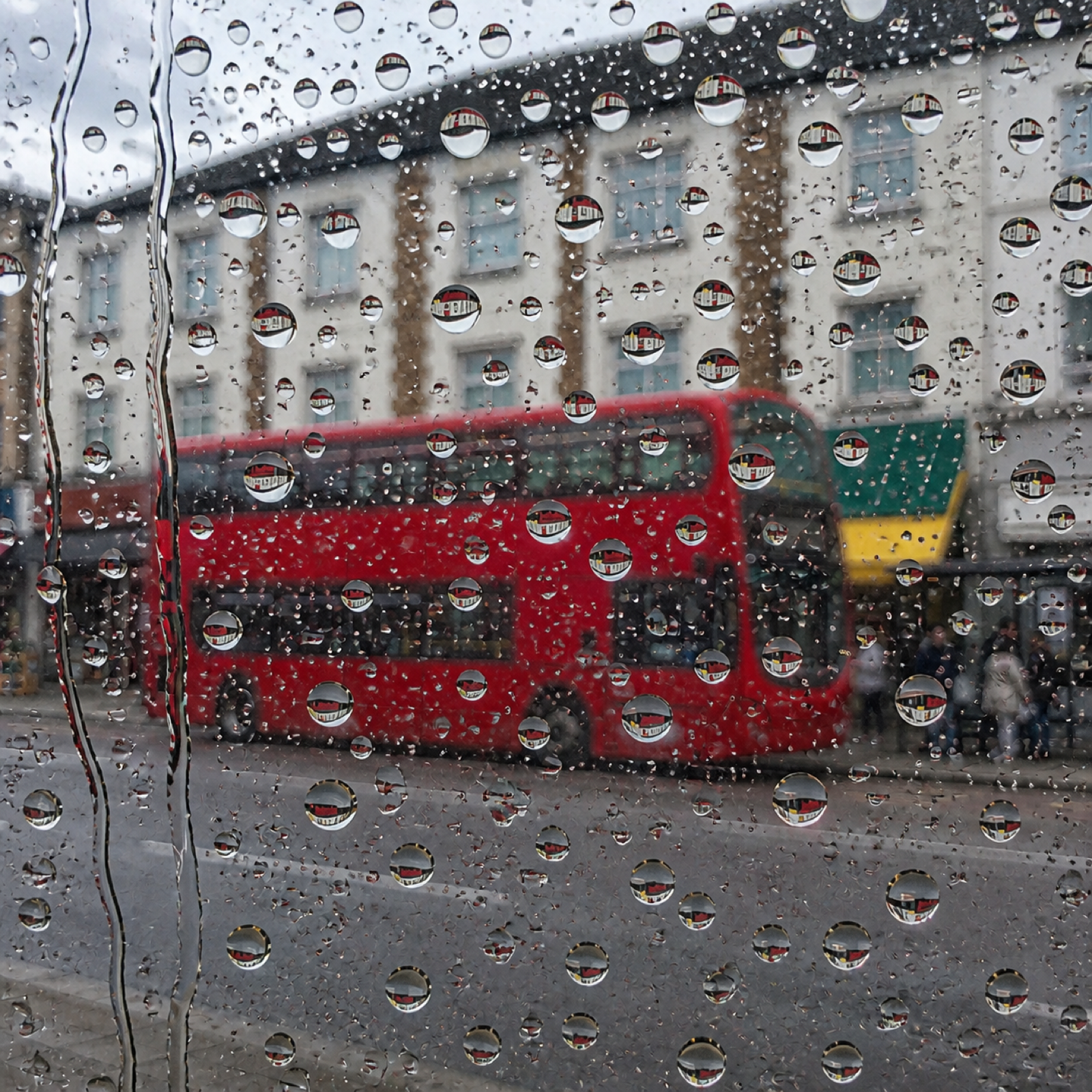
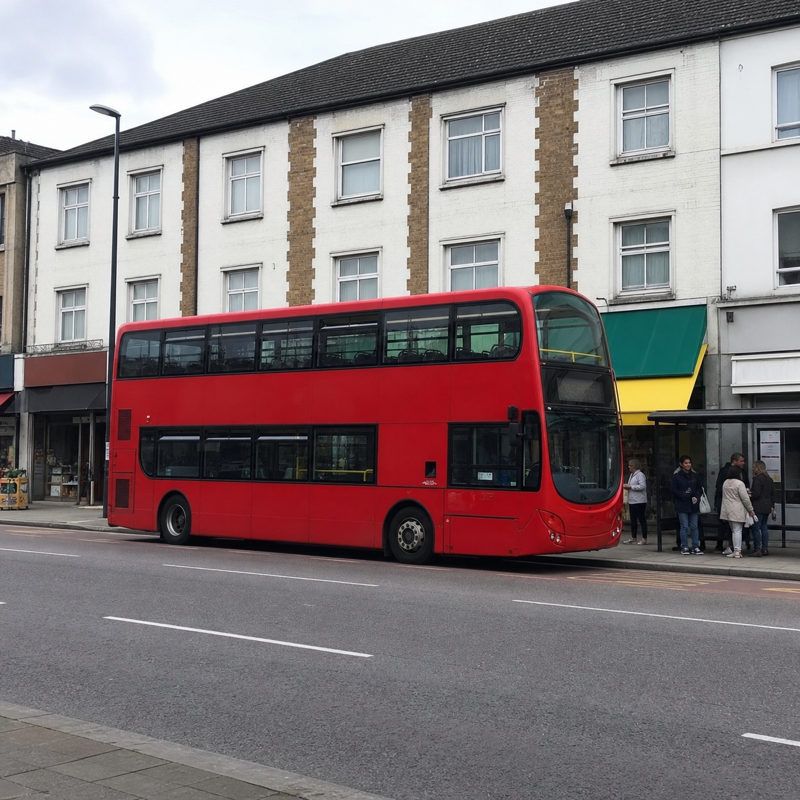
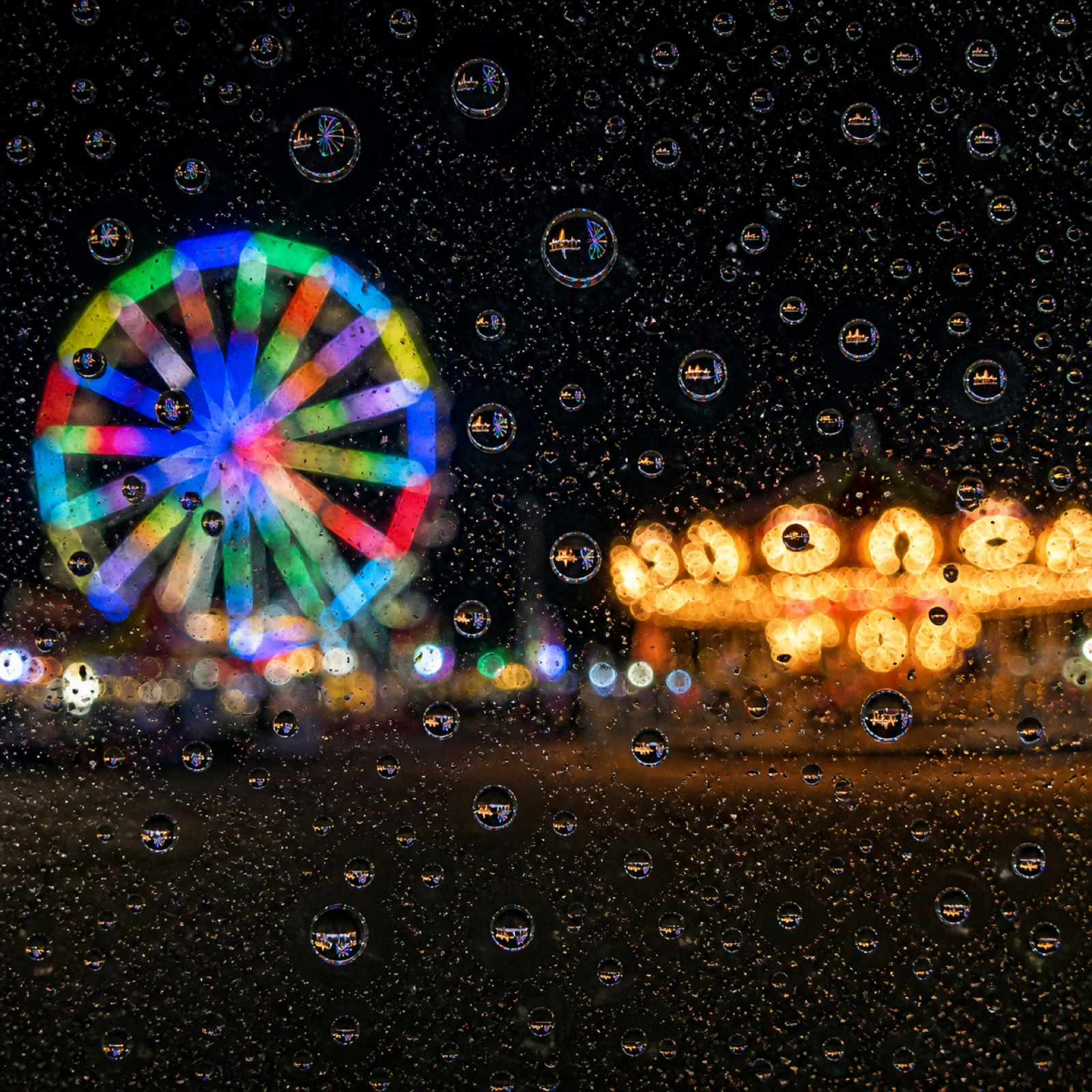
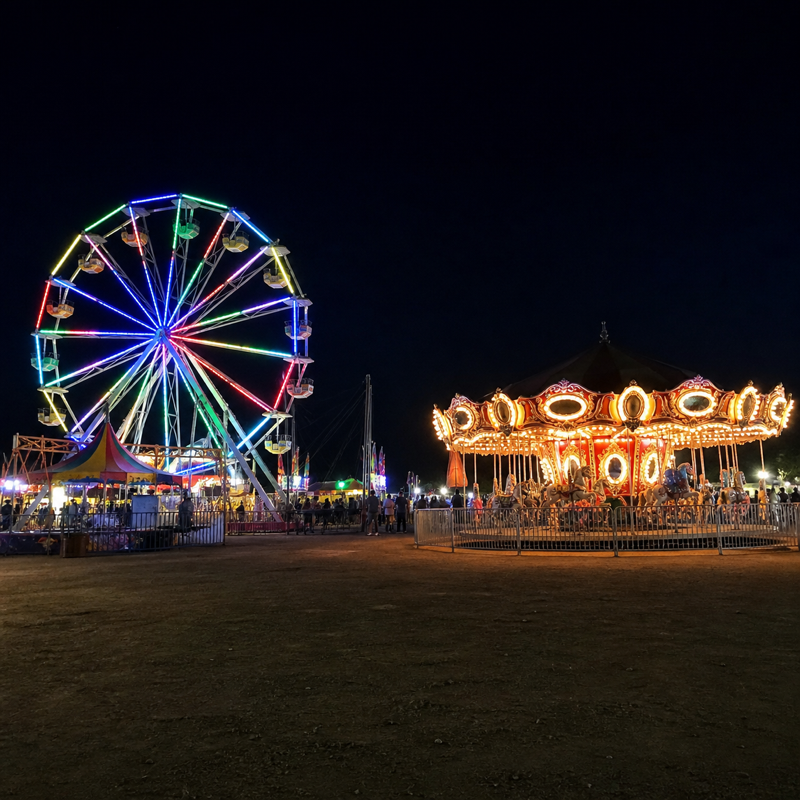
One treatment, two different photographs. A daylight street and a fairground at night — and the night one is the proof, because a drop sitting on black sky has nothing to sample and still comes back full of lights.
The optics bind, and the second run puts it beyond argument. The drops scattered across the black sky of the fairground each hold a small bright arc of the ferris wheel and a smear of the carousel's bulbs; a drop over nothing cannot borrow a colour from underneath it, so the drop is imaging the scene. The same thing happens in daylight: drops lying on grey tarmac carry the red of the bus and the pale shopfronts from the top of the frame. Two honest limits. The inversion is stated in the body and I could not confirm it by measurement — comparing the vertical colour profile inside a large drop against the scene gave 0.87 correlation flipped against 0.75 upright, which is suggestive rather than proof, because that profile is nearly symmetric. And the focus instruction binds unevenly: the fairground behind its drops is properly soft with big even discs where the bulbs are, while the daylight street stayed closer to sharp than the body asks. Choose a scene with point lights in it if you want the whole effect.
Generated for this library
Input
  On glass    fat separate drops across the whole pane,
              with two rivulets running down the left
  In the      the red of the bus, so the drops in front of
  drops       it each hold a small upside-down red block
  Photograph  street.png (1254 x 1254)

Returned   1 image · 1:1 · the street through a wet window

drops      each carries a small sharp picture of the
           street rather than a sample of the colour
           under it - drops on grey tarmac hold the
           red of the bus and the pale shopfronts
inversion  visible, but not confirmed by measurement
focus      softer than the photograph, though less so
           than the body asks for
rivulets   two down the left, streaking vertically
words none, in any scriptYou fill in 2 fields — the braced lines at the top. Everything below them is fixed.
- 1What is on the glass
- 2The one thing behind that should be recognisable inside the drops
Every Drop Is a Lens
What this makes
Hand it a photograph and it takes the picture again through a wet window — where each drop holds a small upside-down copy of what is behind it, sharp, while the scene itself goes soft. Two fields.
You are given ONE photograph. Return ONE image: the same scene photographed again through a wet pane of glass. Follow every line. Replace only the FIELDS block; everything after it is fixed.
First — do you have the photograph and the fields?
Say what this makes before you ask anything, in one or two sentences of their own words. Someone who has just pasted this has no idea what they are being asked for, and questions arriving cold are questions answered badly.
If no photograph is attached, stop and ask for one. This re-photographs a particular scene, so there has to be a picture of it.
If either field below still has braces around it, stop and ask. Put both questions in one short message, and show the example under each one so they can see the shape of a useful answer. Wait for the replies, then work. Never fill a brace yourself.
Ask in whatever language they are writing to you in. Translate the questions and the examples; do not make someone read English to tell you what they want.
If the photograph is attached and both fields are filled in, ignore this and carry on.
Fields — replace these two lines only
- What is on the glass: {the pattern of water, and where}
- The one thing behind that should be recognisable inside the drops: {a colour and a shape}
The law everything else follows from
The object is untouched. The photograph of it is taken again.
Everything about the picture changes: there is now a pane of glass between the camera and the scene, the focus is on that glass, and the weather has arrived. Nothing about the scene changes. Same street, same bus, same buildings, same people, same positions, same light. It is that scene, photographed through water.
A drop is a lens, so it turns the picture upside down
This is the whole rewrite, and it is one sentence of optics.
A droplet of water on glass is a small ball lens. Light from behind it crosses inside it, so each drop contains a complete image of what is behind it, shrunk to fit the drop and turned upside down. That is what a rain photograph actually shows, and it is the thing the sources never say. So:
- Every drop holds a small inverted picture, not a blurred sample of the colour it happens to be sitting on. A drop in front of a red bus holds a small red rectangle the wrong way up, with a sliver of pavement above it and sky below.
- The image inside a drop is sharp, because the drop is a tiny aperture. It is the sharpest thing in the picture.
- What is inside a drop comes from behind that drop, so drops in different parts of the pane hold different pieces of the scene.
- The drop takes a bright rim highlight on the side the light comes from, and is darker at its edge where it curves away.
- A drop sitting in front of a light source glows, because it has gathered that light into a point.
If any drop in the result is a soft blob of the colour under it, no optics happened and the picture is a texture overlay.
Runs of water invert one way only
- A rivulet is a cylinder, not a ball. It inverts across its width and not along its length, so what shows in it is flipped left-to-right and smeared vertically.
- The scene inside a run is a set of vertical stripes of the colours behind it, in reverse order across the run.
- Runs have a fat leading head and a thinner tail, and they take a bright line of highlight down one side.
Misted glass carries no image at all
- Where the glass is fogged rather than beaded, light is scattered: the scene behind becomes a soft field of its own colours with no shapes in it.
- Mist is not blur. Blur keeps edges faintly; scattering destroys them completely.
The scene behind is out of focus
- The camera is focused on the glass, so everything behind it is soft — softer the further away it is.
- Bright points behind become discs: the discs are large and even, not star shapes and not small.
- Colours behind stay their own colours, dimmed and spread. Nothing is recoloured by the water.
- The scene keeps its arrangement: same objects, same places, same sizes, just soft.
Never
- Text, numerals, a caption or a watermark anywhere, in any script.
- A droplet texture, a rain overlay, streak brushes or a bokeh layer pasted over a sharp photograph.
- A window frame, a car interior, a sill, a hand, a reflection of the photographer, or a border.
- Rain falling through the air in the scene, unless the photograph already had it.
- A subject the photograph did not contain.
What it should read as
A picture taken by somebody standing inside — the street gone soft, and a hundred small upside-down streets sitting on the glass.
The whole template, in one piece. The steps below are the entire workflow.
How to use it
- Copy the whole template with the button above.
- Attach the photograph and paste the template in the same message.
- Replace the two FIELDS lines. Name the thing inside the drops by its colour and shape, not by what it is.
- Zoom into one drop. It should hold a small, sharp, upside-down piece of the scene behind it — not a blurred sample of the colour it is sitting on.
- Check the scene behind. If it is still sharp, the run put droplets on top of a photograph rather than photographing through them.
What you swap
- What is on the glass
- fat separate drops across the whole pane, with two rivulets running down the left
- The one thing behind that should be recognisable inside the drops
- the red of the bus, so the drops in front of it each hold a small upside-down red block
Before it runs
- A photograph, attached to the message. This re-photographs a particular scene through glass, so there has to be a picture of it.
- Something behind the glass with a strong, simple shape or colour. Whatever goes inside the drops is only a few pixels across, so a busy scene arrives inside them as mud.
- A pattern of water you have decided. 'Rainy' produces a texture; 'fat separate drops with two rivulets down the left' produces a photograph.
- Acceptance that the scene goes soft. The camera can be focused on the glass or on the street, and this focuses on the glass.
When to reach for it
When a picture needs weather and a mood without leaving the subject behind: a cover, a title card, a poster, a moody frame for a feed. Templates in this genre ask for rain on glass and hand back a photograph with blurry blobs stuck on it, because the one thing a drop actually does is never stated.
What changes
- One photograph in, one taken through wet glass out — same scene, seen through water.
- Each drop carries a small inverted image of what is behind it, in focus, because a drop is a lens.
- The scene itself falls out of focus, since the camera is focused on the glass and not on the street.
- Runs of water invert in one direction only, so they streak the scene sideways instead of upside down.
- One image, no droplet-overlay texture, no border, no filter.
Pairs with
- Contrast Dies With DistanceHand it a photograph and it takes the picture again in fog — where contrast falls away by the same fraction every few paces, so the near thing keeps every bit of its own and the far thing is simply gone. Two fields.
- A Grade Moves No ShadowHand it a snapshot and it comes back graded — a named contrast curve, a named colour split, halation and grain — with every object, every shadow and the whole framing exactly where they were. Two fields.
- A Hole Has No Focal PlaneHand it a photograph and it takes the picture again through a pinhole — no lens, so nothing is ever truly sharp and nothing is ever more blurred than anything else, with the corners falling away because of simple geometry. Two fields.