
Enlarge What Is Already Large
Hand it a portrait and it comes back as a caricature that is still unmistakably them — because it only exaggerates what the photograph already had most of, in the order you rank it. Two fields.
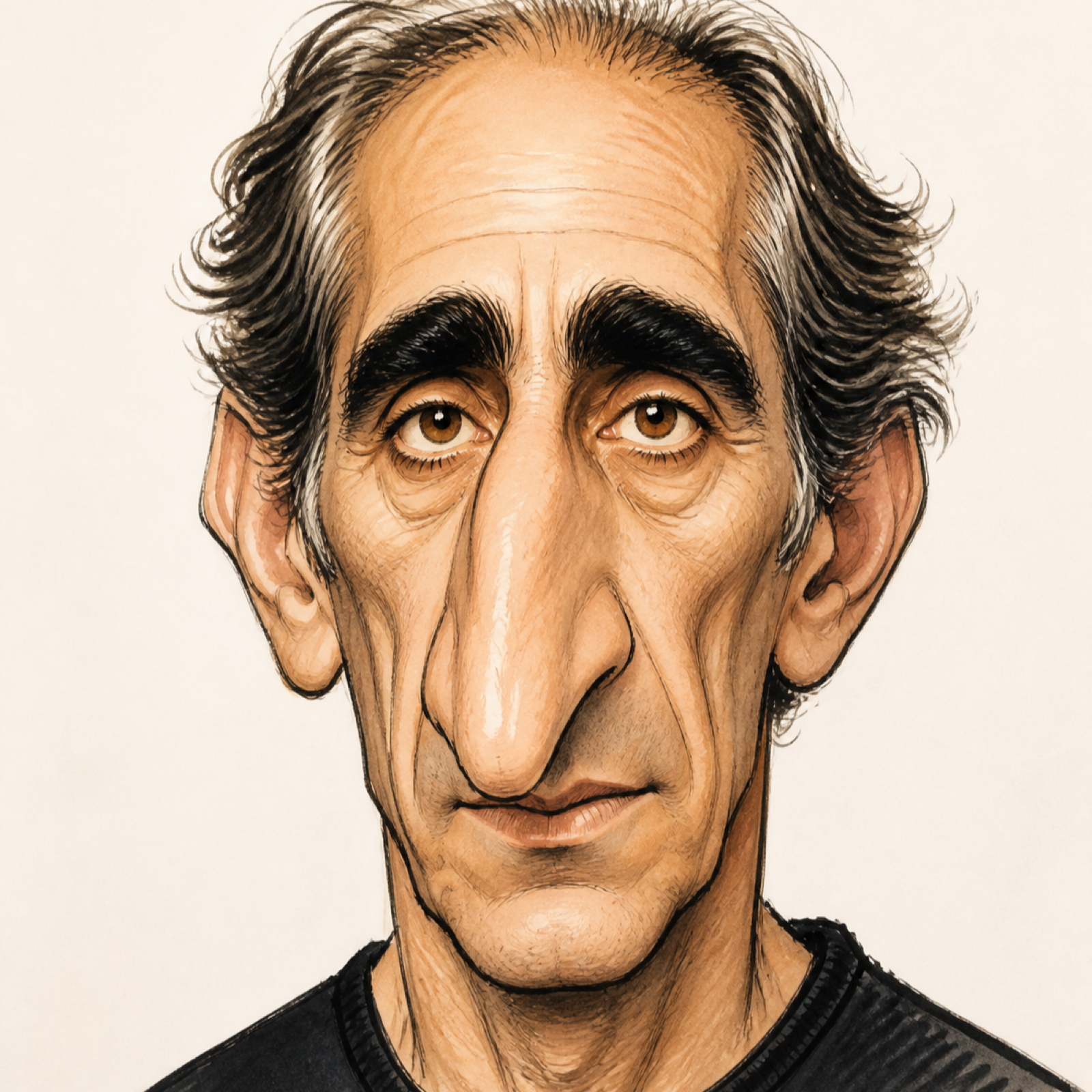
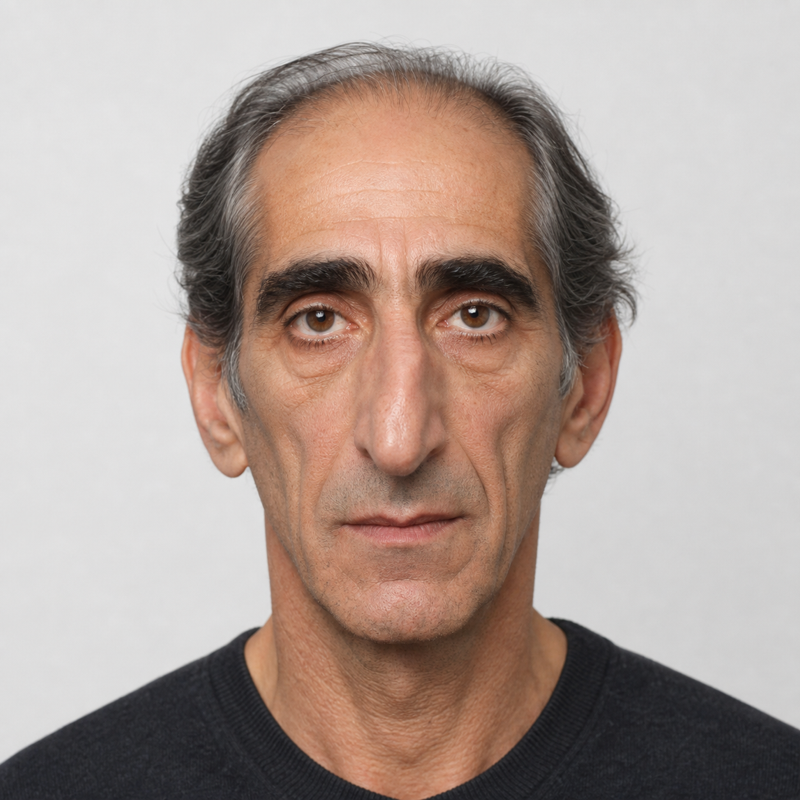
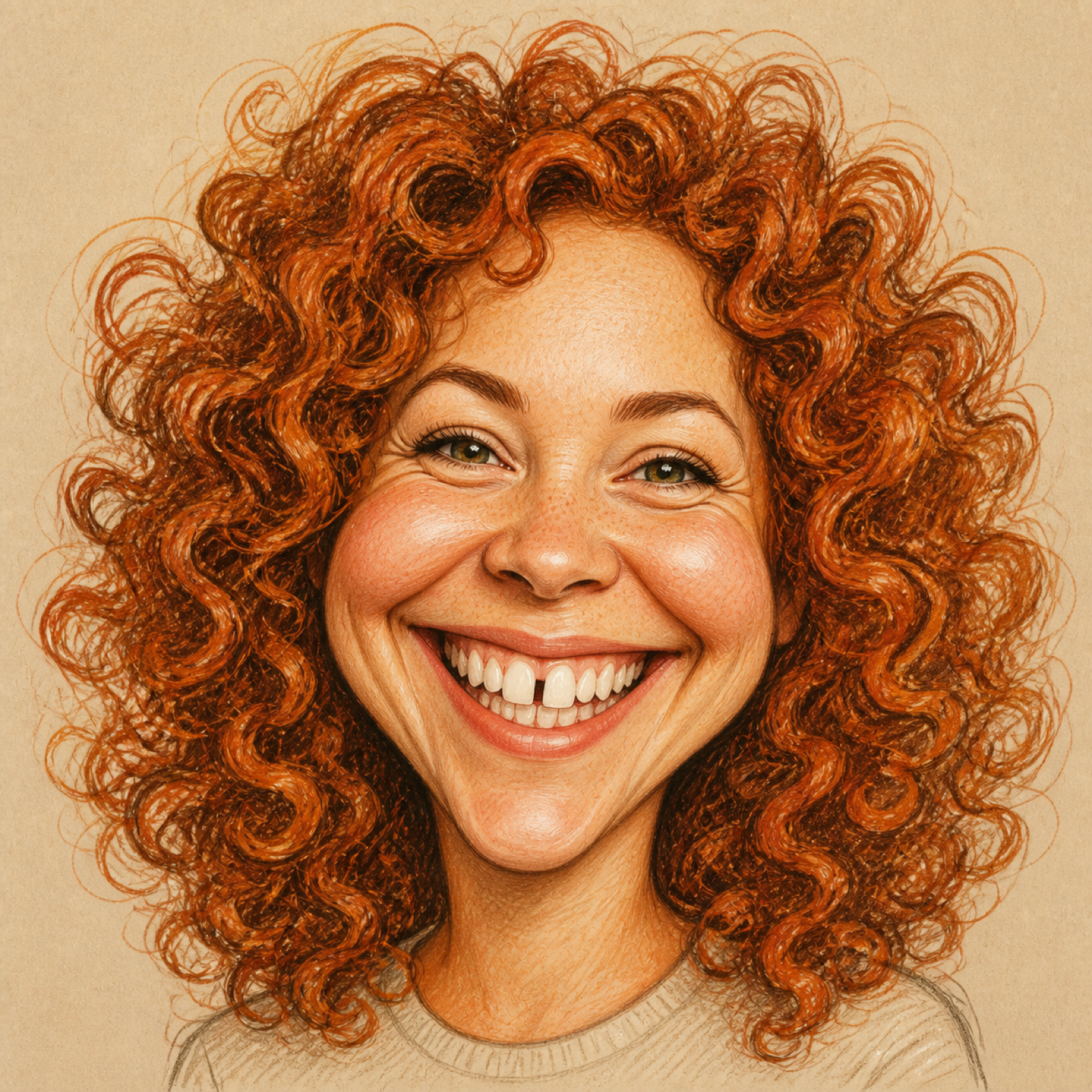
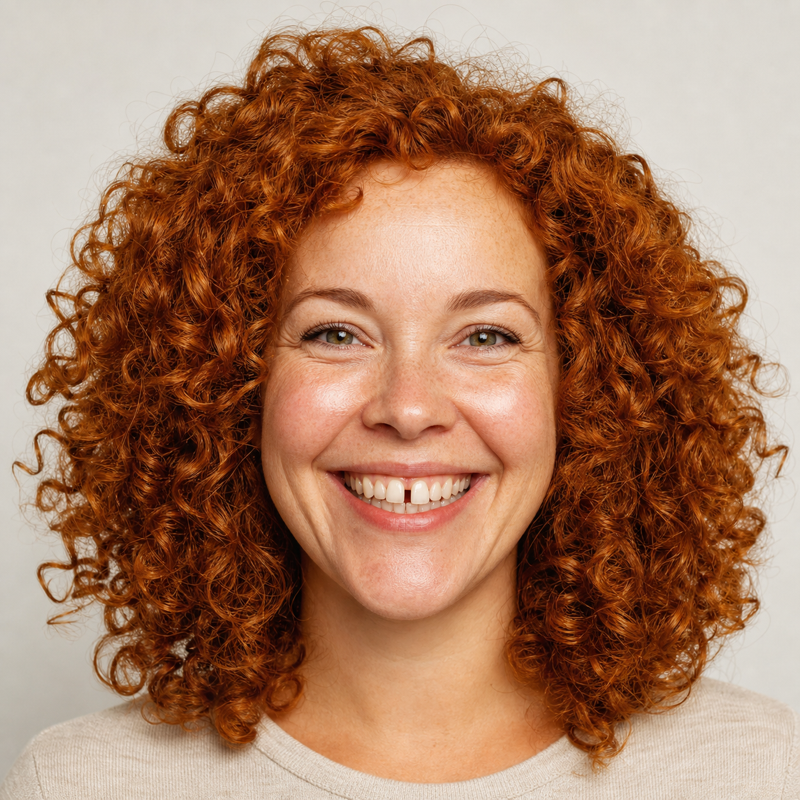
One treatment, two different photographs. One face pushed hard and one barely pushed at all, from the same template on the same day — which is the finding, not the failure.
Direction held in both runs and that is what this rewrite is for: the aquiline nose went longer and more hooked rather than wider, the brows heavier, the eyes deeper; the gap-toothed smile went wider with the gap widened rather than closed. Neither face became a generic big-nosed cartoon. What the template does not control is the amount. The first run is a full caricature and the second is a drawn portrait with a slightly wider smile — same template, same batch, wildly different force. Two specific things behind that. The second run's top-ranked feature was the hair, and the hair already filled the frame: it covers 41.9% of the source and 42.0% of the result, so it could not grow, and the run gave it prominence by drawing the face smaller inside the same halo instead. Rank a feature with room around it, or crop looser. And in the first run the ears came back larger and pointed although they were not on the list, so `everything not on the list is drawn close to true` is a tendency rather than a guarantee — check the features you did not name. The medium field is obeyed unevenly: the coloured pencil on toned paper is exact, the brush-and-ink run kept the ink line but ignored `a single wash of colour` and came back fully coloured.
Generated for this library
Input
  Exaggerate  the aquiline nose · the heavy dark brows ·
              the deep-set eyes · the high forehead
  Drawn as    brush and ink with a single wash of colour,
              the line varying in weight
  Photograph  portrait.png (1254 x 1254)

Returned   1 image · 1:1 · a drawing of him

direction  held - the nose is longer and more hooked,
           not wider; brows heavier, eyes deeper set,
           forehead higher
gradient   visible - nose hardest, forehead barely
rest       hair, parting, expression and age all the
           photograph's - but the ears grew, and were
           not on the list
likeness   unmistakably the same man
words none, in any scriptYou fill in 2 fields — the braced lines at the top. Everything below them is fixed.
- 1What to exaggerate, most prominent first
- 2How it is drawn
Enlarge What Is Already Large
What this makes
Hand it a portrait and it comes back as a caricature that is still unmistakably them — because it only exaggerates what the photograph already had most of, in the order you rank it. Two fields.
You are given ONE portrait. Return ONE image: a drawn caricature of that person. Follow every line. Replace only the FIELDS block; everything after it is fixed.
First — do you have the photograph and the fields?
Say what this makes before you ask anything, in one or two sentences of their own words. Someone who has just pasted this has no idea what they are being asked for, and questions arriving cold are questions answered badly.
If no photograph is attached, stop and ask for one. A caricature is of a particular face, so there has to be a picture of it.
If either field below still has braces around it, stop and ask. Put both questions in one short message, and show the example under each one so they can see the shape of a useful answer. Wait for the replies, then work. Never fill a brace yourself.
Ask in whatever language they are writing to you in. Translate the questions and the examples; do not make someone read English to tell you what they want.
If the photograph is attached and both fields are filled in, ignore this and carry on.
Fields — replace these two lines only
- What to exaggerate, most prominent first: {three or four features, ranked}
- How it is drawn: {a medium, and what the line does}
The law everything else follows from
Everything about how the subject is drawn may change. Nothing about what is in it may.
A caricature is a rendering, including its proportions. What it may not change is *which* features the face has and *which direction* each one departs in. A long nose gets longer. It does not get wider, and it does not become somebody else's nose.
Exaggerate along the direction it already goes
This is the whole rewrite. The genre's sources ask for an exaggerated caricature, which says how much and not which way, so every face is pushed toward the same cartoon: big nose, big chin, small eyes. The result is a stranger. Exaggeration has a direction, and the photograph decides it:
- Measure each named feature against an average face, then go further the same way. Long and thin goes longer and thinner. Broad and flat goes broader and flatter. Never the other way, and never a new direction.
- The list is a gradient. The first feature is pushed hardest, the second less, the third less again. Equal exaggeration of four features is a mask; unequal exaggeration is a likeness.
- Everything not on the list is drawn close to true. This is what makes the exaggerations legible — a face where everything is enlarged reads as a style, not as a person.
- Keep and amplify the asymmetries. A brow that sits higher sits higher still. A smile that pulls to one side pulls further. These carry more recognition than any single feature's size.
What survives untouched
- Which features the face has, and where they sit relative to each other.
- Hair: its shape, its parting, its line, its colour.
- Glasses, facial hair, jewellery and any mark on the face.
- The expression, and its direction.
- The apparent age. Exaggeration is not ageing.
The drawing
- Drawn in the medium the second field names, with the line doing what it says.
- One figure, head and shoulders, on a plain ground.
- Flat or lightly modelled — no photographic rendering, no 3D, no attempt at realism.
- Colour, if any, held to a few flats. The drawing carries the likeness, not the shading.
Never
- A feature enlarged in a direction the photograph did not have.
- Text, numerals, a signature, a caption or a watermark anywhere, in any script.
- A named publication's or artist's house style — the second field names a medium, not somebody else's identity.
- A body, a scene, a prop or a second figure.
- Anything that makes the person look better-looking than the photograph. Flattery and caricature are opposite jobs.
What it should read as
A drawing somebody who knows them would recognise instantly and laugh at — because it is more them than the photograph is.
The whole template, in one piece. The steps below are the entire workflow.
How to use it
- Copy the whole template with the button above.
- Attach the portrait and paste the template in the same message.
- Replace the two FIELDS lines. Rank by how far each feature already departs from an average face, not by how much you want it enlarged.
- Check it against the photograph feature by feature: each one on your list should be further in the direction it already went, and nothing else should have moved.
- If it reads as a generic cartoon, the list named ordinary features — pick the ones a stranger would notice first instead.
- Rank a feature that has room around it. Something already touching the edge of the frame cannot be made bigger, so it gets its prominence from everything else shrinking — which reads as a much milder drawing than you asked for.
What you swap
- What to exaggerate, most prominent first
- the aquiline nose · the heavy dark brows · the deep-set eyes · the high forehead
- How it is drawn
- brush and ink with a single wash of colour, the line varying in weight
Before it runs
- A portrait, attached to the message, with the face clearly visible and lit well enough to read its structure.
- Permission from the person, if it is not you. A caricature is a picture of them and it is unflattering by design, which is a thing to have agreed in advance.
- A ranked list, not a description. The order is the instruction: the first item is pushed hardest and the last barely at all, and that gradient is what keeps it a likeness.
- Features that are actually unusual in the photograph. Exaggerating something average produces a stranger, because the drawing then differs from the person in the one place a viewer is looking.
When to reach for it
When somebody should be drawn rather than photographed: a column head, a leaving card, a programme, a wall of regulars. Templates in this genre ask for an exaggerated caricature and give you a stranger with a big nose — every face pushed toward the same cartoon rather than away from the average in its own direction.
What changes
- One portrait in, one caricature out — drawn, exaggerated, and still recognisably that person.
- Only features the photograph already has more of than average are enlarged, in the order you rank them.
- Everything not on the list is drawn closer to true, which is what makes the exaggerations read.
- The asymmetries are kept and amplified rather than tidied, because they are the cheapest likeness available.
- One drawing, no caption, no signature, no borrowed house style.
Pairs with
- Nobody Becomes a RelativeHand it a photograph of several people and it comes back as one stylised group portrait — everybody still themselves, because you name what tells each of them apart. Two fields.
- The Face Has Only Six MarksHand it a photograph of somebody and it comes back as a small handmade collectible figure of them — you name the few features that have to survive, because a toy face has room for about six. Two fields.
- The Studio Changes, the Face Does NotHand it any photograph of somebody and it comes back as a proper studio portrait of them — new light, new background, new styling, and a face that is still theirs down to the features you named. Two fields.