
The Surface Takes the Shadow
Hand it a photograph of one thing and it puts that thing down on another surface — stone, oak, linen, steel — with the shadow the new material would really cast. Two fields; the background stays out of it.
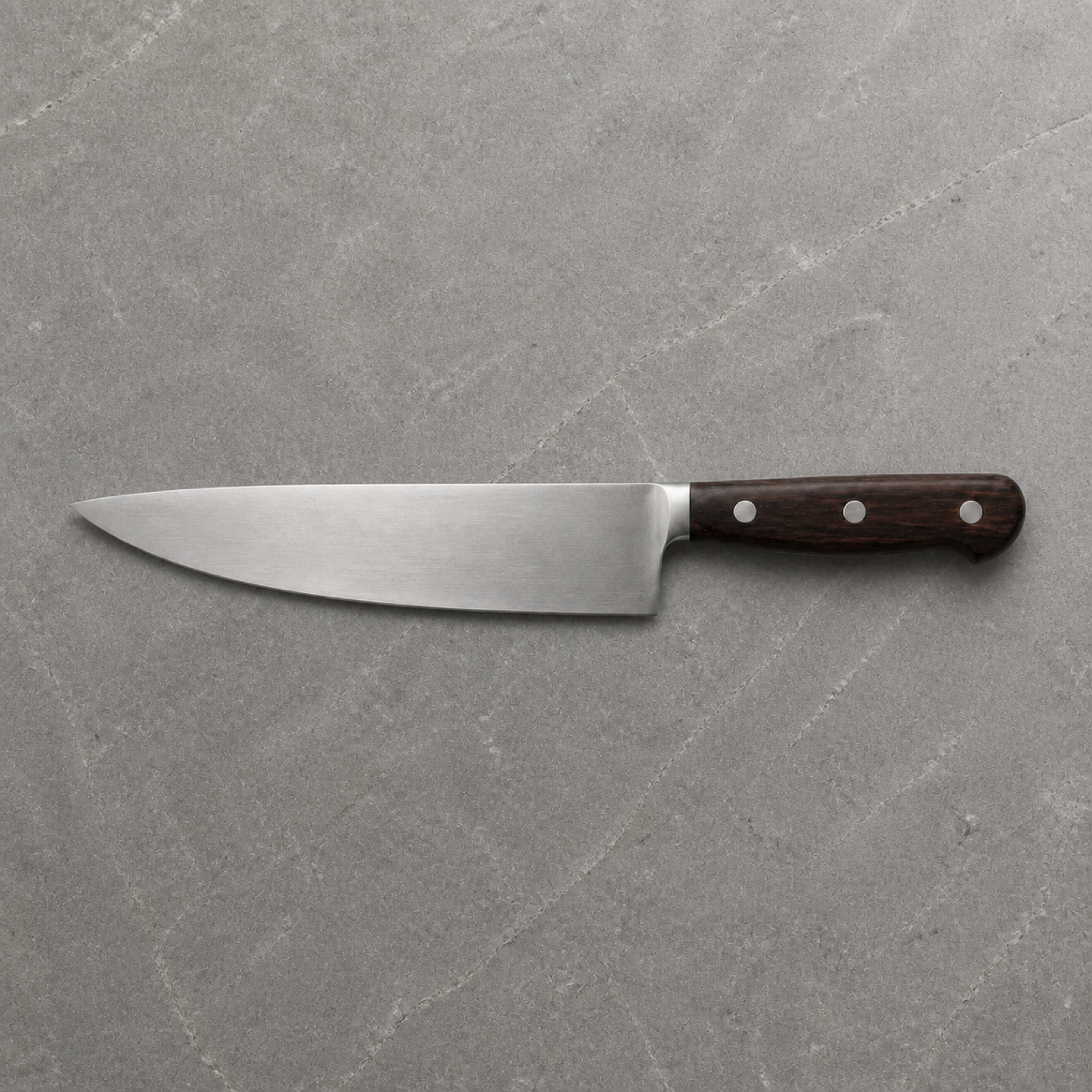
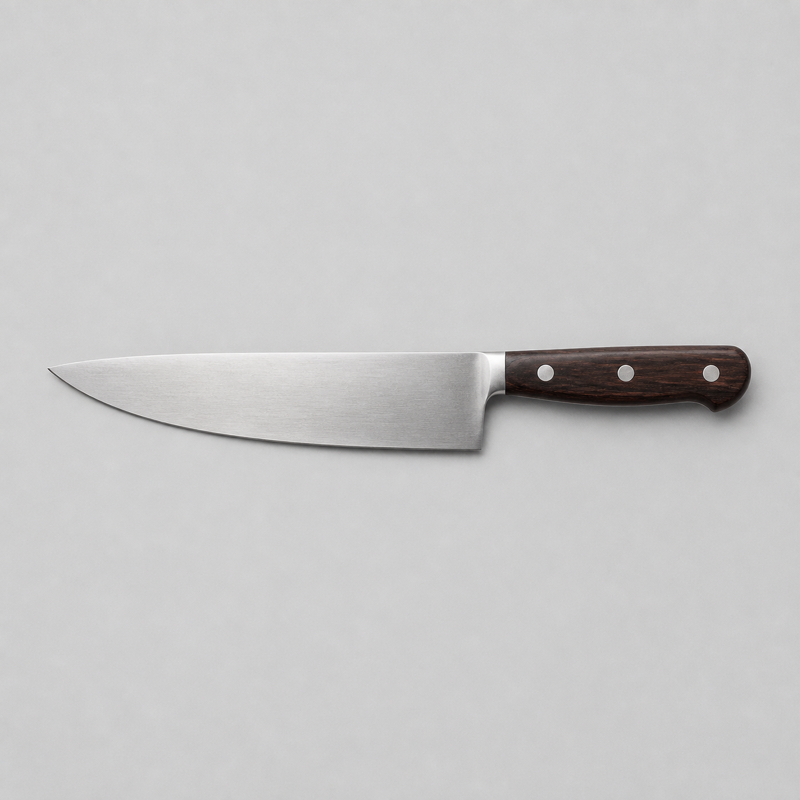
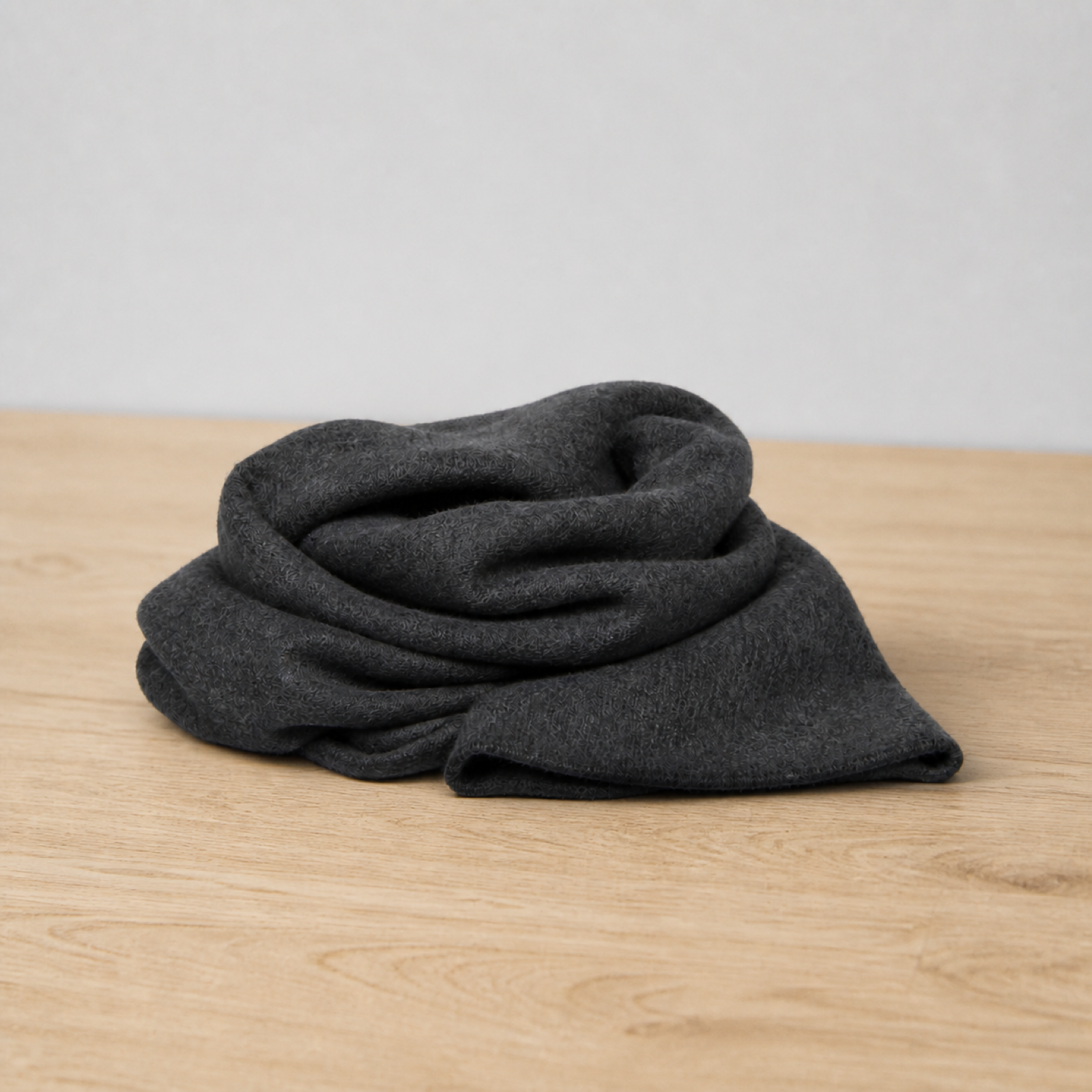
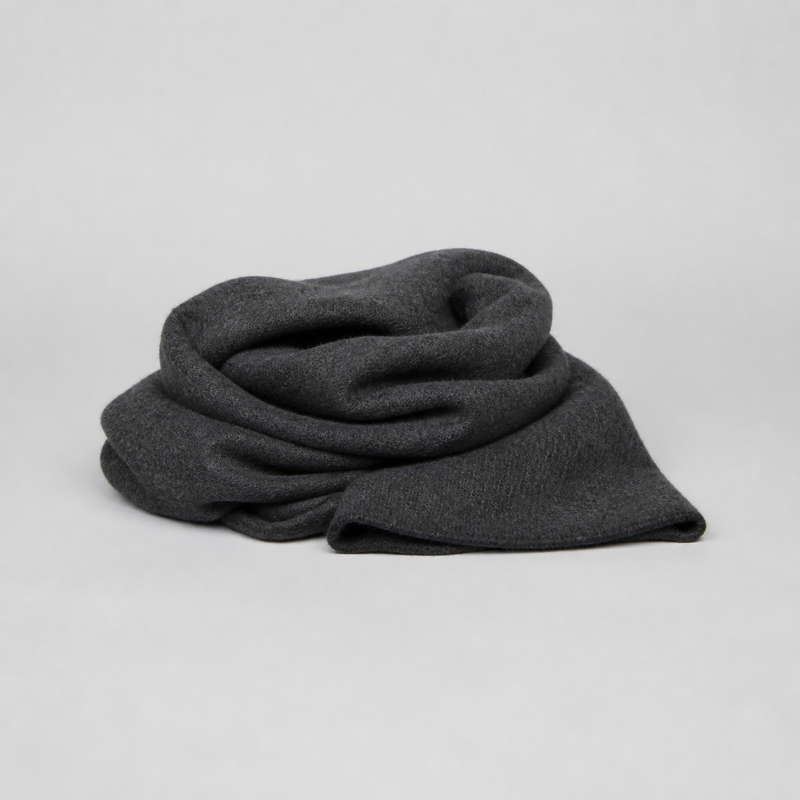
One treatment, two different photographs. A flat steel blade onto honed limestone, and a soft wool bundle onto pale oak — the two surfaces chosen to sit opposite each other on the hard-and-soft line the template runs on. Both objects came through untouched, including the knife's three handle rivets and the scarf's nap.
Both runs hold the camera, which is the strictest thing here and the easiest to lose. The scarf measures 73.2% of frame width going in and 73.4% coming out, 37.8% high against 38.1%, centred within a tenth of a percent — that is the whole camera law, met. This is the treatment that holds it best, and the reason is that it adds nothing to the frame: a new surface takes no room, so nothing has to move to make space for it. The weaker half is the hard-surface shadow. The knife on limestone came back with a real shadow but a softer one than honed stone should give, and with no visible bounce back into the blade's underside, so that half of the rule is doing less work in the picture than in the words. The scarf on oak is the better of the two: the shadow breaks along the grain it crosses, and the wool presses into nothing, because oak does not give.
Generated for this library
Input
  Object     a steel chef's knife, wood handle
  Surface    honed grey limestone, hard and slightly cool
  Photograph knife-front.png (1254 x 1254)

Returned   1 image · 1:1 · the same object, a new table

object    silhouette, finish and marks carried over
          unchanged - nothing added to it
camera    same eye line and distance; outline lands on
          itself
surface   limestone against steel - cooler, matt,
          and far lighter in value
shadow    soft and tight under the blade - less crisp
          than honed stone should give
back      plain and out of focus, unchanged
words none, in any scriptYou fill in 2 fields — the braced lines at the top. Everything below them is fixed.
- 1The object, in three or four words
- 2The surface, and what it does to light
The Surface Takes the Shadow
What this makes
Hand it a photograph of one thing and it puts that thing down on another surface — stone, oak, linen, steel — with the shadow the new material would really cast. Two fields; the background stays out of it.
You are given ONE photograph of ONE object. Return ONE image: the same object on a different surface, with the shadow that surface would actually make. Follow every line. Replace only the FIELDS block; everything after it is fixed.
First — do you have the photograph and the fields?
Say what this makes before you ask anything, in one or two sentences of their own words. Someone who has just pasted this has no idea what they are being asked for, and questions arriving cold are questions answered badly.
If no photograph is attached, stop and ask for one. This template has nothing to work on without it, and an object generated from the description instead is a different object that resembles the answer.
If either field below still has braces around it, stop and ask. Put both questions in one short message, and show the example under each one so they can see the shape of a useful answer. Wait for the replies, then work. Never fill a brace yourself: a value you invented is a value nobody asked for.
Ask in whatever language they are writing to you in. Translate the questions and the examples; do not make someone read English to tell you what they want.
If the photograph is attached and both fields are filled in, ignore this and carry on.
Fields — replace these two lines only
- The object, in three or four words: {what is in the photograph}
- The surface, and what it does to light: {a material, and whether it is hard or soft}
The law everything else follows from
You can only see the face the photograph gave you.
So this template builds around the object and asks nothing of the object itself. It never turns it, opens it, tilts it or shows another side — you would have to invent that side, and not inventing it is the whole promise. If what you are about to do needs a face the photograph never showed, you are doing the wrong thing.
The object — carried through untouched
- Silhouette, proportions, and the position of every part.
- Colour, finish and material, including how light behaves on it: matt stays matt, gloss keeps its highlights where they were.
- Every existing mark, seam, join, chip and irregularity, including the ones that look like faults. They are how someone recognises their own thing.
- Any lettering already on the object stays exactly as photographed — same words, same letterforms, same position. You are not setting it again.
Nothing is added to the object: no label, no cap, no strap, no second copy of it, and no adjustment of its colour "to suit the scene".
The camera — it did not move
- Same eye line, same distance, same focal length.
- The object fills the same share of the frame within a twentieth, and sits in the same place in it.
- Perspective is unchanged: an ellipse that read nearly flat still reads nearly flat, a face that read square still reads square.
Check it by overlay. Stack the two frames. The object's outline should land on itself. Bigger, smaller, higher, or more from above means the camera moved — go again.
The ground — it must not swallow the object
Whatever you build, the surface behind and beneath the object differs from the object in at least two of these three: value, temperature, texture.
A sand-coloured object on sand-coloured linen under warm light is one object photographed inside itself. It looks tasteful as a thumbnail and vanishes at size, and it is the standing failure of this genre — scenery chosen to flatter the product rather than to show it.
The light — it comes from somewhere
- One dominant source, with a direction and a height you have decided.
- Every shadow in the frame agrees with it, including the object's own.
- The contact shadow starts where the object meets the ground and is darkest there. A detached shadow is an object pasted onto a picture.
The treatment — a new surface, and only that
Replace what the object stands on. Nothing else in the frame changes: the background stays the same plain, out-of-focus nothing it was, at the same distance behind.
The shadow is remade, not moved. The material decides it:
- A hard, smooth surface — stone, glass, steel, sealed wood — takes a crisp shadow with a defined edge, and returns some light into the object's underside as a faint bounce.
- A soft or fibrous surface — wool, linen, sand, moss — swallows the shadow. Its edge is diffuse, it is shorter, and there is no bounce.
- A textured surface breaks the shadow along its own grain: the shadow crosses the grain rather than lying on top of it, and dips into every trough.
The object presses into a soft surface and rests on a hard one. Where it presses, the material deforms around it.
Never
- Lettering, numerals, logos, labels, watermarks, price flashes, badges or packaging copy anywhere in the picture, in any script. Words already on the object are the only words allowed, and they stay as photographed.
- Hands, faces, figures, or any part of a person.
- A border, frame, vignette or sticker laid over the picture.
- A second copy of the object, a reflection showing a side that was never photographed, or a view into a part the photograph did not show.
What it should read as
The same photograph, taken on a different table. Not the object cut out and dropped onto a texture — the whole frame lit once, with the object standing in it.
The whole template, in one piece. The steps below are the entire workflow.
How to use it
- Copy the whole template with the button above.
- Attach your photograph and paste the template in the same message.
- Replace the two FIELDS lines. In the second, always say whether the material is hard or soft — that is the line the shadow is built from.
- Check the result by overlay before shipping: put it over the original and look at the object's outline. If it grew, shrank or tilted, the camera moved.
- For a set, run each product separately against the same surface line, rather than asking for them together.
What you swap
- The object, in three or four words
- a steel chef's knife, wood handle
- The surface, and what it does to light
- honed grey limestone, hard and slightly cool
Before it runs
- An actual photograph of the thing, attached to the message. There is nothing here for a description to work on.
- A visible contact point. The whole treatment is the meeting of object and surface, so a shot cropped above the base has nothing to rebuild.
- A surface that is not the object's own colour. Oak under an oak-coloured thing clears none of the difference the ground law asks for.
- One surface per run. Two materials in one frame is a set, not a swap, and it is a different template.
When to reach for it
When a packshot is right and the table is wrong: a listing shot that needs warmth, a set of products that have to sit on one surface, a photograph taken on whatever was to hand. Templates in this genre swap the surface and keep the old shadow, which is what makes a composite look like a composite.
What changes
- One photograph in, one out — the object where it was, a new material underneath it.
- The shadow is remade for the new surface: crisp and short on stone, soft and swallowed on wool.
- The background stays plain and out of focus, so the only change is the one you asked for.
- The object is untouched, down to its marks, and the camera holds its distance and eye line.
- The surface has to differ from the object in two of value, temperature and texture, so the thing cannot dissolve into its own table.
Pairs with
- Kept Among Its OwnHand it a photograph of one thing and it gathers three to five companions from the same material world around it — wood with wood, glass with glass — all lower, all behind, none crossing it. Two fields.
- Lit Across, Not AtHand it a photograph of a thing and it takes one macro shot of the part you name — lit from the side so the surface proves the one fact you would otherwise have to touch it to learn. Two fields.
- One Colour and a ShadowHand it a photograph of one thing and it takes everything away — no surface, no horizon, no props — leaving the object on one flat colour with one soft shadow under it. Two fields; the listing shot.