
The Plate Cannot See Red
Hand it a photograph and it takes the picture again on a wet collodion plate — an emulsion blind to red and wide awake to blue, so lips go black, a sky goes blank white, and the whole look follows from that one fact. Two fields.
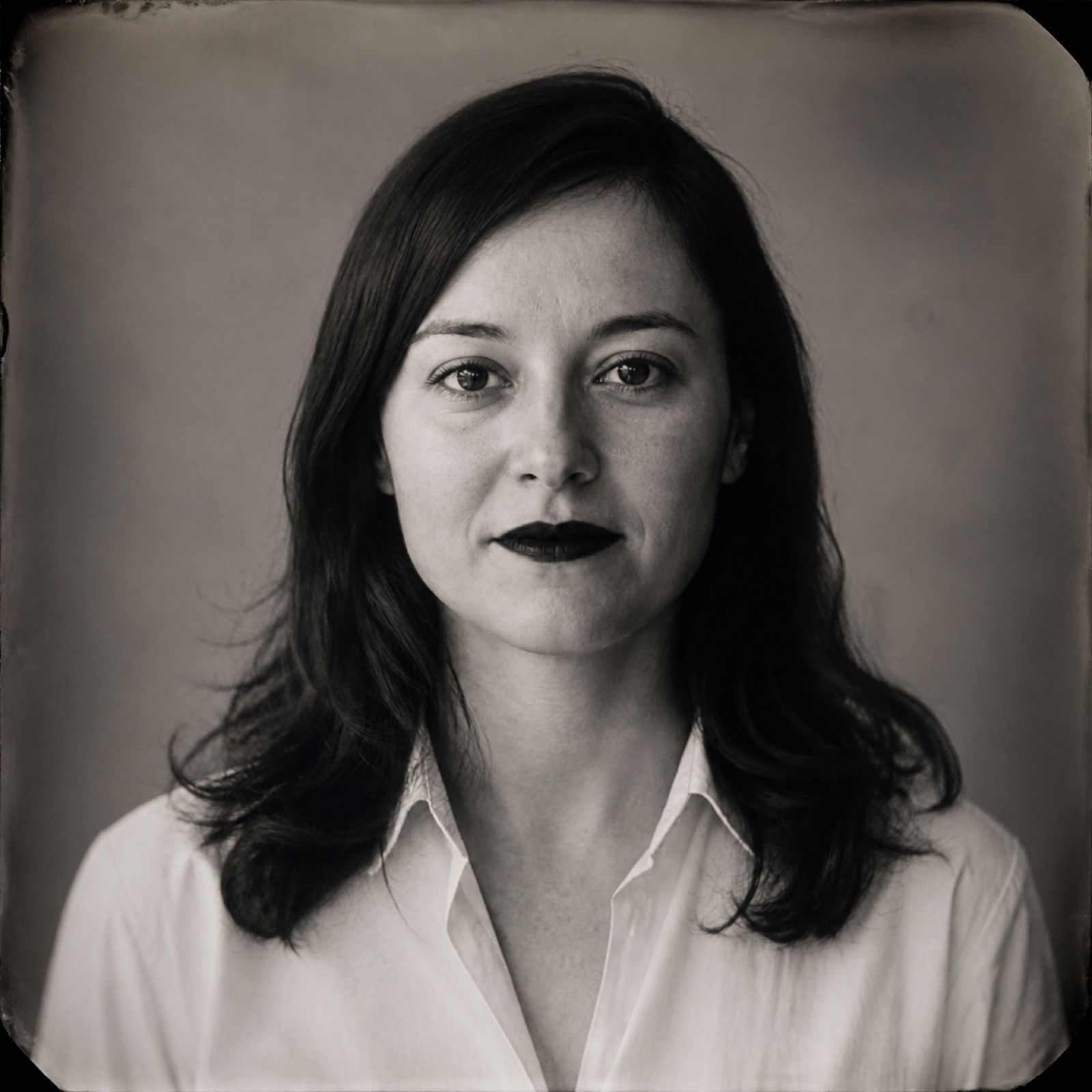

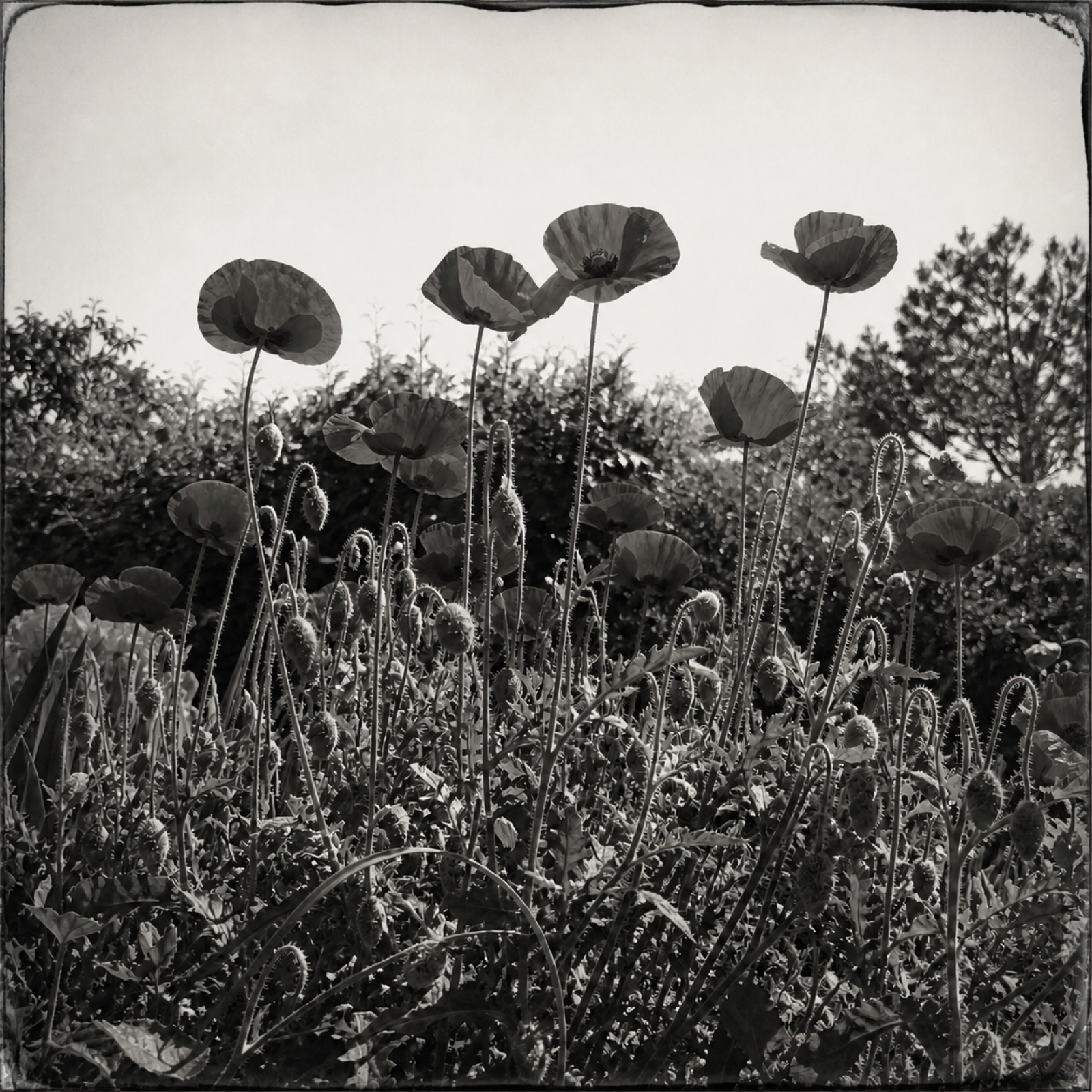
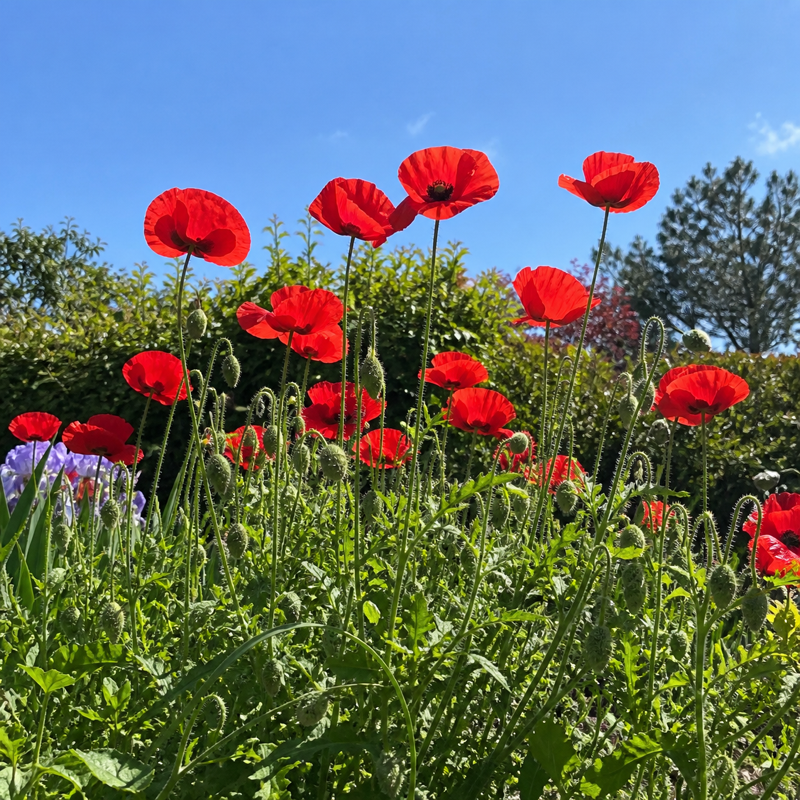
One treatment, two different photographs. A woman with red lipstick and a border of red poppies under a blue sky — two pictures chosen so that both of the colours which swap ends are in the frame.
The one fact does the whole job. Red goes dark in both runs: the lipstick drops from 84 to 58 and becomes the darkest thing in the face, the poppies drop from 76 to 62, and the green foliage behind them falls from 67 to 39. The clear sky climbs from 151 to 228 — blank white paper with no cloud in it, exactly as promised. Neither result is a sepia wash over a modern set of tones; the tones are genuinely in a different order. One claim in the first draft was too strong and is corrected in the template. It said a pale blue shirt records as white. Measured, the shirt did not move: its brightness relative to the cheek went from 0.98 to 0.99. A pastel blue is already mostly white, so there is nothing for the effect to do — look for it on a saturated blue. Both runs also added a heavy dark poured edge around the whole plate, which is more than the body asks for and close to the applied damage it forbids. Crop it off if you do not want it.
Generated for this library
Input
  Red         the lipstick
  Blue        the shirt is pale blue, background neutral
              grey
  Held still  long enough that one blink shows, and a
              loose strand of hair has drifted
  Photograph  portrait.png (1254 x 1254)

Returned   1 image · 1:1 · the same woman, on a plate

reds       the lipstick is the darkest thing in the
           face, 84 down to 58
blues      the sky in the second run went 151 to 228,
           blank white with no cloud - but the pale
           blue shirt did not move at all
skin       pale and waxy, the cheek unchanged at 192
green      foliage 67 down to 39
plate      a heavy poured edge on both, more than the
           body asks for
words none, in any scriptYou fill in 2 fields — the braced lines at the top. Everything below them is fixed.
- 1What in the picture is red, and what is blue
- 2How long the sitter had to hold still, said as what moves
The Plate Cannot See Red
What this makes
Hand it a photograph and it takes the picture again on a wet collodion plate — an emulsion blind to red and wide awake to blue, so lips go black, a sky goes blank white, and the whole look follows from that one fact. Two fields.
You are given ONE photograph. Return ONE image: the same subject photographed again on a wet collodion plate. Follow every line. Replace only the FIELDS block; everything after it is fixed.
First — do you have the photograph and the fields?
Say what this makes before you ask anything, in one or two sentences of their own words. Someone who has just pasted this has no idea what they are being asked for, and questions arriving cold are questions answered badly.
If no photograph is attached, stop and ask for one. This re-photographs a particular subject, so there has to be a picture of it.
If either field below still has braces around it, stop and ask. Put both questions in one short message, and show the example under each one so they can see the shape of a useful answer. Wait for the replies, then work. Never fill a brace yourself.
Ask in whatever language they are writing to you in. Translate the questions and the examples; do not make someone read English to tell you what they want.
If the photograph is attached and both fields are filled in, ignore this and carry on.
Fields — replace these two lines only
- What in the picture is red, and what is blue: {the red things and the blue things}
- How long the sitter had to hold still, said as what moves: {something that could not stay put}
The law everything else follows from
The object is untouched. The photograph of it is taken again.
Everything about the recording changes: a different emulsion, a different sensitivity, an exposure measured in seconds. Nothing about the subject changes. The lipstick is still red, the shirt is still blue, the poppies are still poppies. The plate is blind to some of those colours; nobody repainted anything. Same face, same clothes, same arrangement, same light.
The emulsion sees blue and not red
This is the whole rewrite, and every part of the look follows from it.
Wet collodion responds to blue and ultraviolet and barely at all to red. It is not a black and white photograph: it is a photograph of a different world, where the tones are in the wrong order. So, before anything else, rearrange the picture:
- Red records as black. Red lips are black. A red flower is black. A red bus, a red brick, a red jumper — all near black, darker than anything around them.
- Blue records as white, and the deeper the blue the stronger the effect. A clear sky is blank white paper with no cloud in it whatsoever, because it overexposed long before the clouds registered. Blue eyes are almost as pale as the whites around them. A very pale blue is already close to white, so it barely moves — look for this on saturated blues, not on a pastel.
- Green records dark, so foliage, grass and a green painted door all come out heavy and near black.
- Yellow records dark as well, which surprises people.
- What is neutral stays where it was. A grey background is still mid grey.
If a red thing in the result is a middle grey, the run has made an ordinary monochrome photograph and this has not been done.
What that does to a face
- Skin comes out mottled, because it is not one colour. Anything reddish in it goes dark and everything else does not.
- Lips are dark, often the darkest thing in the face.
- Freckles, blemishes, broken veins, a shaving rash and sunburn all darken, which is why every sitter of the period looks weathered.
- Eyes look pale and staring when they are blue or grey, and dark and flat when they are brown.
- Nothing is smoothed or flattered. The plate is unkind and that is the point of it.
Seconds, not a fraction of one
- Whatever the second field names as moving is smeared — a blink showing as two half-open lids, a strand of hair drawn out, a hand doubled.
- Everything that held still is extremely sharp, sharper than a modern snapshot, with enormous detail in the still parts.
- Anything that moved right through is simply absent: a person who walked across the frame is not there at all.
- The subject looks composed and slightly rigid, the way somebody holding a pose for eight seconds looks.
The plate itself
- A shallow depth of field from a large lens: the plane of the eyes sharp, the ears already going.
- The corners fall off a little in brightness and sharpness.
- The tone is the plate's own — a cool grey-black through to cream, or a warm brown-black, but one consistent tone across the whole picture and not a sepia wash laid over it.
- The pour leaves its own edge: the coating is slightly uneven at one side, and slightly thinner in one corner.
- No damage. No scratches, no cracks, no chemical stains, no fingerprints, no dust, no fake age. This is a good plate, freshly made.
Never
- Text, numerals, a date, a studio mark, a caption or a watermark anywhere, in any script.
- Scratches, cracks, stains, sprocket holes, torn edges, film borders or any applied damage.
- A frame, a case, a mount, a hand holding it, or a photograph of a photograph.
- A sepia filter over an otherwise modern set of tones.
- A subject the photograph did not contain.
What it should read as
A plate somebody made this morning in 1863 — and the giveaway is that the mouth is the darkest thing in the picture.
The whole template, in one piece. The steps below are the entire workflow.
How to use it
- Copy the whole template with the button above.
- Attach the photograph and paste the template in the same message.
- Replace the two FIELDS lines. List the reds and blues by where they are, not by mood.
- Check the reds first. If a red thing came back as mid-grey, the run made a black and white photograph rather than a collodion one.
- Then check the blues. A blue sky should be blank white paper with no cloud in it at all.
What you swap
- What in the picture is red, and what is blue
- the lipstick is red; the shirt is pale blue and the background is neutral grey
- How long the sitter had to hold still, said as what moves
- long enough that one blink shows, and a loose strand of hair has drifted
Before it runs
- A photograph, attached to the message. This re-photographs a particular subject, so there has to be a picture of it.
- Red and blue in the frame, and knowing where they are. The whole effect is those two colours swapping ends, and a picture with neither in it comes back as an ordinary grey photograph.
- Tolerance for an unflattering face. Everything reddish in skin — lips, cheeks, freckles, broken veins, a healing scratch — goes dark, which is why everybody in 1860 looks weathered.
- A subject that could hold still. Seconds-long exposures suited seated people and buildings; they did not suit a dog, a child or a busy street.
When to reach for it
When a portrait or a place should look like it was made in 1860: a cover, a title card, a programme, a wall print. Templates in this genre ask for a vintage wet plate look and hand back a sepia photograph with scratches on it, which is a modern picture in fancy dress — every tone still in its modern place.
What changes
- One photograph in, one collodion plate out — the same subject on an emulsion that sees a different world.
- Red records as black and blue records as white, which rearranges every tone in the picture before anything else happens.
- Skin comes out mottled and weathered, because everything reddish in it goes dark.
- The exposure is seconds long, so whatever could not hold still is smeared and everything else is razor sharp.
- One image, no scratches applied as decoration, no border, no frame.
Pairs with
- A Hole Has No Focal PlaneHand it a photograph and it takes the picture again through a pinhole — no lens, so nothing is ever truly sharp and nothing is ever more blurred than anything else, with the corners falling away because of simple geometry. Two fields.
- Leaves Are Bright, the Sky Is NotHand it a photograph and it takes the picture again on infrared film — where anything alive and green glows white and a clear sky goes almost black, because chlorophyll is a mirror at a wavelength the eye cannot see. Two fields.
- The Light Travels With the SensorHand it a photograph of a thing and it comes back as a flatbed scan — no perspective at all, and everything lifted off the glass falling to black within a couple of centimetres. Two fields.