
Lit Across, Not At
Hand it a photograph of a thing and it takes one macro shot of the part you name — lit from the side so the surface proves the one fact you would otherwise have to touch it to learn. Two fields.
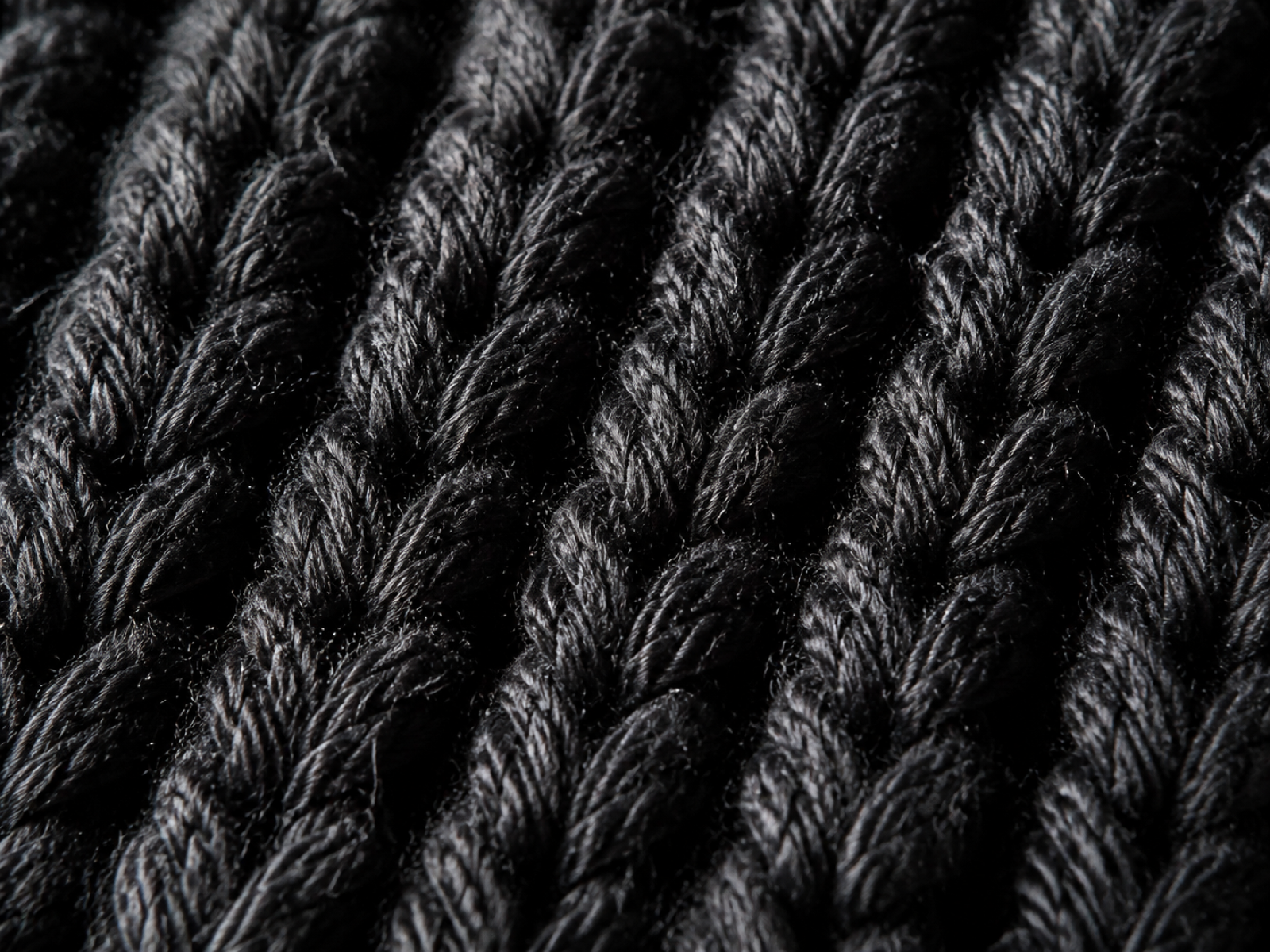
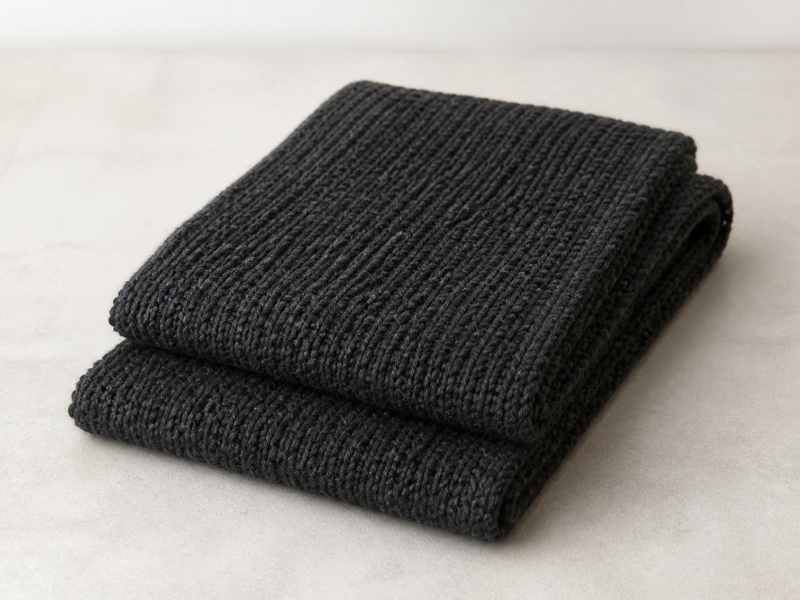
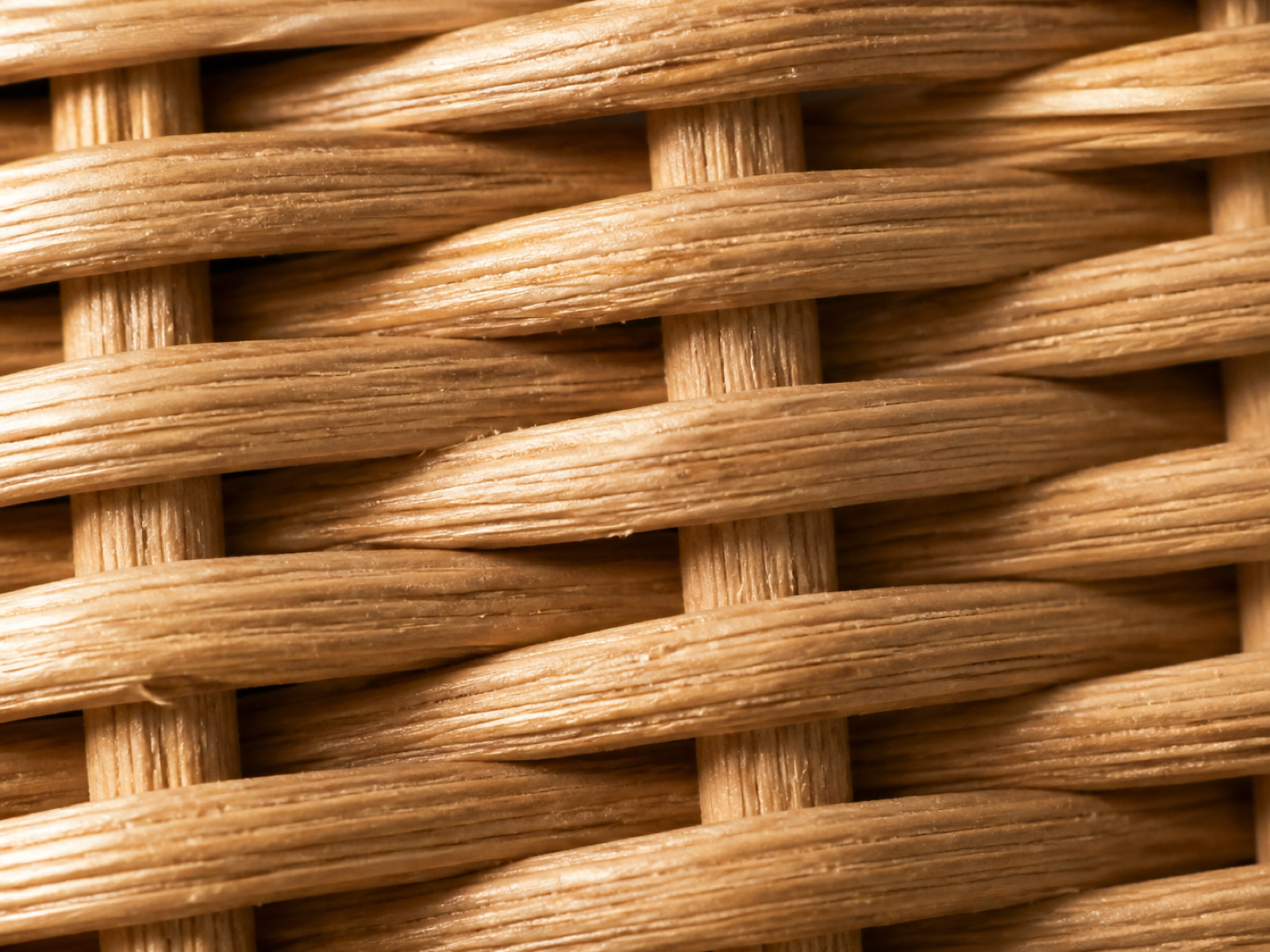
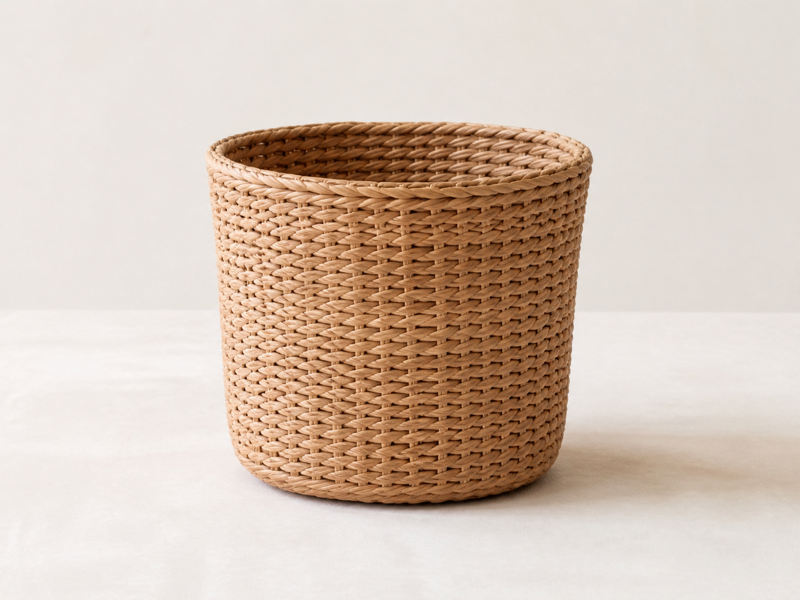
One treatment, two different photographs. A charcoal knit and a woven basket — one claim about fibre, one about cane. Both shots had to make their case with light alone, and neither carries a word.
The physics holds and it is the whole point of this rewrite. Both results are raked from one side with weak fill, both have every raised element throwing a shadow into the one behind it, and both prove their claim without a caption: the wool shows fibre ends standing off the surface, the cane shows grain running differently in every strand. That is what the sources ask for as fine texture and soft directional lighting and do not get. Two things to know. The basket changed gauge: the photograph shows a fine tight weave and the macro came back as thick coarse cane — the run rebuilt the structure at the magnification asked for instead of enlarging the structure that was there, which is a quiet way of photographing a different basket. Check the count of strands or stitches against the original, not just the look. And the scarf run is a lesson about the field rather than the template: it was told to frame the cable, and the scarf is ribbed with no cable on it. A part the photograph does not contain cannot be photographed, and the run sensibly showed what was there instead.
Generated for this library
Input
  Which part  the cable running down the front of the
              scarf, close enough that four cables fill
              the frame
  Must prove  that the wool is lofty and spun rather than
              flat and synthetic - the fibre ends should
              catch the light off the surface
  Photograph  scarf.png (1254 x 940)

Returned   1 image · 4:3 · a macro of the cable

framing    close, four columns of knit across the frame
light      raking from the upper left - every rib throws
           a shadow into the one behind it
proof      the claim lands: fibre ends stand off the
           surface and catch the light, loose slubs and
           all
material   charcoal in, charcoal out - but the field said
           cable and this scarf is ribbed, so the picture
           shows what is there rather than what was asked
words none, in any scriptYou fill in 2 fields — the braced lines at the top. Everything below them is fixed.
- 1Which part, and how close
- 2What the picture has to prove
Lit Across, Not At
What this makes
Hand it a photograph of a thing and it takes one macro shot of the part you name — lit from the side so the surface proves the one fact you would otherwise have to touch it to learn. Two fields.
You are given ONE photograph of ONE thing. Return ONE image: a macro photograph of the part named below, taken again with the camera close and the light across the surface. Follow every line. Replace only the FIELDS block; everything after it is fixed.
First — do you have the photograph and the fields?
Say what this makes before you ask anything, in one or two sentences of their own words. Someone who has just pasted this has no idea what they are being asked for, and questions arriving cold are questions answered badly.
If no photograph is attached, stop and ask for one. This photographs a particular thing again; there is nothing to go close to without it.
If either field below still has braces around it, stop and ask. Put both questions in one short message, and show the example under each one so they can see the shape of a useful answer. Wait for the replies, then work. Never fill a brace yourself.
Ask in whatever language they are writing to you in. Translate the questions and the examples; do not make someone read English to tell you what they want.
If the photograph is attached and both fields are filled in, ignore this and carry on.
Fields — replace these two lines only
- Which part, and how close: {a named part, and how much of it fills the frame}
- What the picture has to prove: {one thing somebody should be able to conclude}
The law everything else follows from
The object is untouched. The photograph of it is taken again.
Everything about the picture changes: the framing goes to a few centimetres, the lens becomes a macro, the light is rebuilt. Nothing about the thing changes. Same colour, same weave, same grain, same wear, same irregularities. It is a second photograph of the object in the first one, not an improved version of it.
Lit across, not at
This is the whole rewrite, and it is one sentence of physics.
A surface is visible as texture only when the light travels *along* it, so that every raised part casts a small shadow into the part behind it. Light falling straight at a surface fills those shadows and flattens it — which is why a well-exposed close-up of a knit can look like a photograph of a printed picture of a knit.
So:
- One key, low and from one side, raking across the surface at a shallow angle.
- Every raised element casts a short shadow in the direction away from that light: each loop of a knit, each strand of a weave, each ridge of a grain.
- Fill is weak or absent. The shadows are what carries the texture, and filling them undoes the shot.
- No second key, no ring light, no light from the camera's position.
What the picture has to prove
The second field is a claim, and this photograph is its evidence. Build the shot so somebody looking at it can reach that conclusion without being told:
- Show the thing the claim rests on. Loft means fibre ends standing off the surface, so they have to be lit against something darker. Density means the count of threads is visible. A join means the two parts and the join are all in frame.
- Go close enough that the claim is legible, and no closer. Past a certain magnification everything is abstract and proves nothing.
- Depth of field is shallow but not decorative. The part carrying the claim is sharp; things fall off behind it. Never so shallow that the evidence is soft.
The material does not change
- Same colour as the photograph, under harsher light. A raking key darkens a surface; it does not recolour it.
- Same weave, gauge, grain and finish. Nothing upgraded, tidied, straightened or made more even.
- Irregularities stay: a slub in the yarn, a scar in the leather, a gap in the weave. They are usually the most convincing thing in the frame.
Never
- Text, numerals, callouts, arrows, measurement marks or a watermark anywhere, in any script.
- A second view, an inset, a split frame or a before-and-after.
- Props, hands, water drops, scattered petals, or anything else added to dress the shot.
- A part of the object the photograph does not show.
- A frame, a border, a vignette or a mock-up.
What it should read as
The photograph a buyer would ask for before spending the money — close, raked, and answering one question completely.
The whole template, in one piece. The steps below are the entire workflow.
How to use it
- Copy the whole template with the button above.
- Attach the photograph and paste the template in the same message.
- Replace the two FIELDS lines. Say how close in terms of the thing itself — four cables across the frame, three weave squares — rather than in millimetres.
- Judge it by the second field only: can somebody looking at this conclude the thing you said? If not, the shot has failed however sharp it is.
- Check the colour against the original. A raking light darkens a surface and the run will sometimes bake that in.
What you swap
- Which part, and how close
- the cable running down the front of the scarf, close enough that four cables fill the frame
- What the picture has to prove
- that the wool is lofty and spun rather than flat and synthetic — the fibre ends should catch the light off the surface
Before it runs
- A photograph of the thing, attached to the message, in which the part you want is visible. A macro of a region the picture never showed is an invention.
- A part worth going close to. A flat printed panel has nothing for a raking light to find; a knit, a weave, a grain, a seam or a join does.
- A claim you are willing to make. The second field is a statement about the product, and the picture is evidence for it — so it has to be true of the thing in your photograph.
- No text. If the shot needs a label to make its point, the point is not in the picture and a caption will not put it there.
When to reach for it
When a listing needs the shot that answers is it any good: the loft of a knit, the grain of a leather, the weave of a basket, the join on a seam. Templates in this genre ask for fine texture and soft directional lighting, which are adjectives, and hand back a pretty close-up that proves nothing.
What changes
- One photograph in, one macro out — the part you named, at the distance you named.
- The light rakes across the surface rather than falling on it, which is the difference between a texture photograph and a close-up.
- You say what the picture has to let somebody conclude, and the shot is built to prove that one thing.
- The material is the material in the photograph — same colour, same weave, same wear, nothing upgraded.
- No type, no callouts, no arrows: the picture makes the case on its own.
Pairs with
- Kept Among Its OwnHand it a photograph of one thing and it gathers three to five companions from the same material world around it — wood with wood, glass with glass — all lower, all behind, none crossing it. Two fields.
- One Colour and a ShadowHand it a photograph of one thing and it takes everything away — no surface, no horizon, no props — leaving the object on one flat colour with one soft shadow under it. Two fields; the listing shot.
- Photographed by Somebody Who Owns ItHand it a clean product photograph and it takes the picture again as a customer would — wrong light, off-centre, a real room behind it — with the product itself unchanged. Two fields.